
Plants
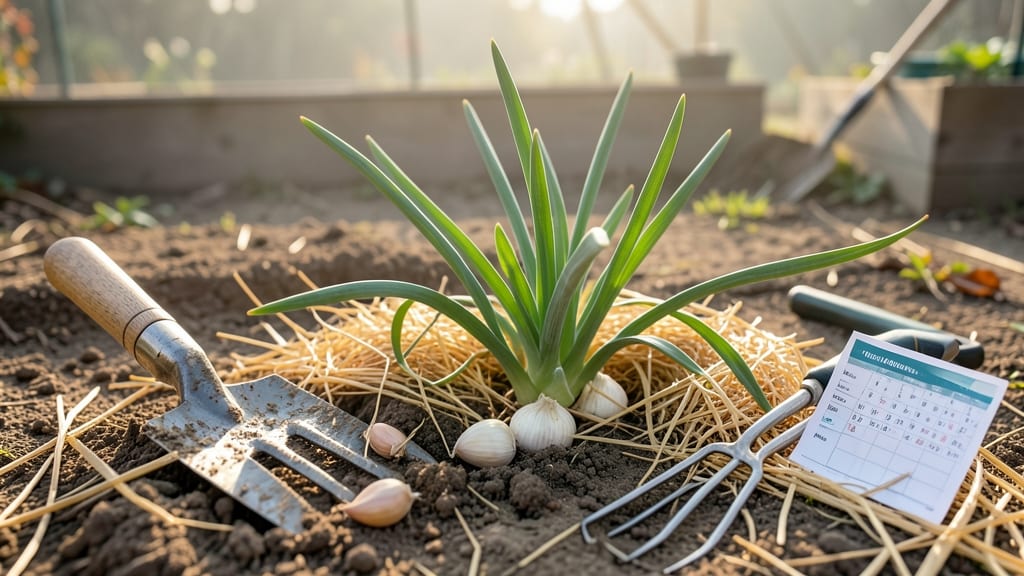
Planting garlic in New Jersey isn't just about timing—it's about matching your 🧄 varieties to the 6a-7a chill hours that define your region's success. Skip the guesswork and you could end up with small, pungent bulbs instead of the bold, flavorful harvest you're after.
Most gardeners here know the golden window is between October and November, but what you don't always hear is how microclimates across NJ create wildly different outcomes.
Northern counties like Sussex might get away with planting in early October, while southern areas like Camden need to wait until late October to avoid frost damage.
Here's the game-changer: hardneck varieties like Rocambole need 400-600 chill hours, while softnecks like Silverskin can handle 300-400**.
I'll walk you through exactly how to sync your planting with NJ's frost dates, soil prep secrets, and even when spring planting might work for you—because getting this right means the difference between garlic that stores all winter and bulbs that shrivel by July.
New Jersey’s garlic planting zones: matching chill hours to varieties
New Jersey’s USDA zones 6a-7a create microclimates where northern and southern regions differ by 200+ chill hours. This matters because hardneck garlic—like Rocambole or Purple Stripe—needs 300–1,000+ hours below 40°F to form bulbs.
Skip this, and you’ll grow leeks, not garlic! Let’s match your zone to the perfect variety.
In northern NJ (zones 6a), like Bergen or Morris counties, winters deliver 800–1,000 chill hours. Here, Artichoke or German White varieties thrive.
Meanwhile, southern NJ (zones 7a), such as Cape May or Atlantic City, sees 500–700 chill hours, ideal for Silverskin or Creole types. Chill-hour mismatches lead to small, weak bulbs or no harvest at all.
Here’s your chill-hour cheat sheet for NJ’s garlic varieties, including local success stories from Rutgers Cooperative Extension trials. Use this to pick the right garlic for your yard:
Why does this matter? Chill hours trigger bulb formation. In southern NJ, planting German White (needs 800+ hours) might yield leeks instead of garlic. Conversely, northern NJ gardeners can push varieties like Rocambole for larger bulbs and longer scapes (those edible garlic stems!).
Pro tip: Use Rutgers’ chill-hour calculator (linked below) to check your exact hours. Input your zip code, and it’ll show your local chill accumulation by December 1st. For example, Trenton (7a) averages 650 hours, while Hudson (6a) hits 900+ hours. Adjust your variety choice accordingly!
For urban gardeners in Jersey City or Newark, container-growing works—just use well-draining pots and mulch heavily to mimic chill exposure. Rocambole or Silverskin are your best bets here, as they tolerate milder winters better than German White.
Local success story: Farmers at Two Rivers Farm in Hamilton Township (zone 6b) grow Rocambole and Purple Stripe side by side. Their secret? Planting Purple Stripe in early October (to capture extra chill hours) and Rocambole in late October (to avoid early frost). This dual-planting strategy
Step-by-step planting timeline: from October to April in NJ
New Jersey’s fall planting window for garlic is your best bet—it gives bulbs the chill hours they need to develop properly. For hardneck varieties, aim to plant between mid-October and early November, while softneck garlic can stretch into December.
The key is getting cloves in the ground 4-6 weeks before the first hard frost (usually mid-November in most of NJ).
If you miss the fall window, don’t worry—spring planting is possible, though it yields smaller bulbs. For spring, plant in early April, as soon as the soil warms to 40°F. This method skips the chill period, so bulbs won’t be as robust, but it’s better than nothing!
Urban gardeners in Zone 7a (like Newark) should plant 2 weeks earlier than rural areas in Zone 6a (like Sussex County).
📅 Your NJ Garlic Planting Calendar
-
🌱 October (Mid-October - Early November)
Soil temp: 60-70°F | Action: Plant hardneck garlic 4-6" deep, 6" apart in rows 12" apart. Add 2-3" of compost and mulch with straw. -
🍂 November (Late November - December)
Soil temp: Below 50°F | Action: Plant softneck garlic or late hardneck varieties. Cover with 4-6" of mulch to protect from freeze-thaw cycles. -
❄️ December - February
Soil temp: Frozen | Action: Monitor mulch depth (6" minimum). Avoid disturbing soil—garlic is dormant but storing energy for spring growth. -
🌱 Early April (Spring Backup)
Soil temp: 40°F+ | Action: Plant spring garlic in well-drained beds. Expect smaller bulbs—prioritize flavor over size. -
☀️ May - June
Soil temp: 60°F+ | Action: Remove mulch to encourage growth. Water deeply once a week if rainfall is <1 inch. -
🌾 July - August
Soil temp: 75°F+ | Action: Harvest when lower leaves brown and bulbs feel firm. Cure in dry, shaded area for 2 weeks.
Before planting, test your soil pH—garlic thrives in 6.0-7.0. If your soil is too acidic, add lime (1 lb per 100 sqft) 4-6 weeks before planting.
For hardneck varieties, space cloves 6 inches apart in rows 12 inches apart—this gives bulbs room to expand. Softneck garlic can be planted slightly closer (4-5 inches apart) since it produces smaller bulbs.
In urban NJ gardens, where space is limited, try container growing. Use a 12-inch-deep pot with well-draining soil and plant 3-4 cloves per container. Place pots in full sun and water consistently—containers dry out faster than in-ground beds.
Just remember, containers warm up quicker in spring, so adjust your planting timeline 1-2 weeks earlier.
One of my biggest tips is to label your garlic beds. NJ’s climate varies dramatically from north to south—what works in Cape May (Zone 7b) might fail in Hudson County (Zone 6b).
I use wooden stakes with the variety name and planting date. This helps track which bulbs thrive in your microclimate and which need adjustments next year.
Finally, don’t rush harvest. Even if neighbors are pulling garlic in July, wait until at least 50% of lower leaves brown. Rushed harvests lead to small, pungent bulbs with poor storage life.
For hardneck varieties, aim for mid-August—this gives bulbs time to mature without overheating. Store cured bulbs in a cool, dry place (50-60°F) for up to 6 months.