
Plants
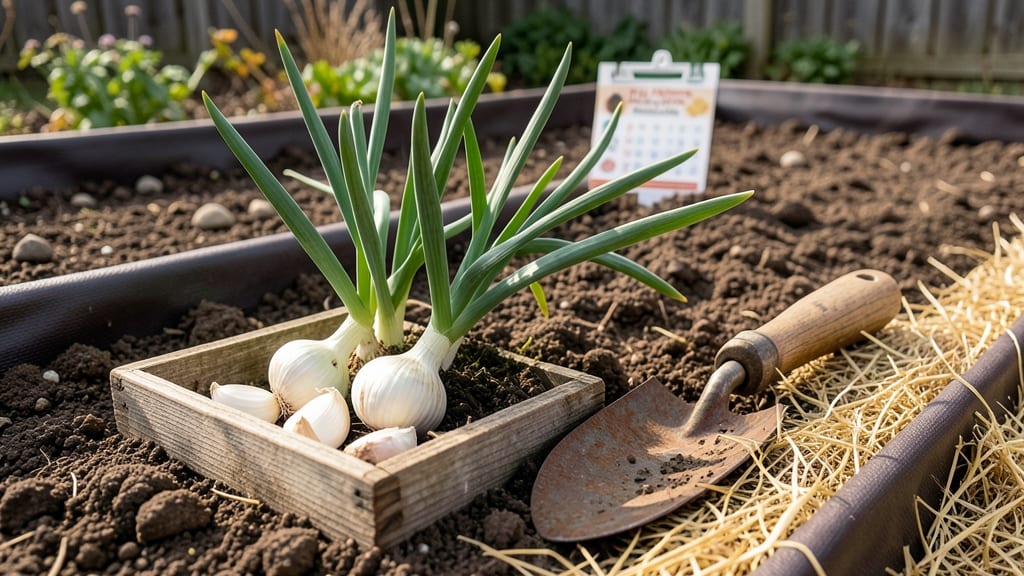
Planting garlic at the wrong time in New York can mean the difference between a thriving 🧄 harvest and wasted effort—and most gardeners get it wrong without even realizing it.
The key to growing hardneck varieties that produce those prized scapes lies in understanding your local frost dates and soil conditions, which vary dramatically from NYC to Upstate.
If you’ve ever wondered why your garlic bulbs stay small or never fully mature, timing is likely the culprit. Unlike many vegetables, garlic needs a period of cold dormancy to develop properly, which means planting it too early or too late can ruin your chances for a strong yield.
In this guide, I’ll walk you through the exact October-November window that works best for New York’s USDA Zones 5b-7a, including how to adjust for early frosts in the Hudson Valley or late-season planting in the city.
You’ll also discover why hardneck varieties thrive with fall planting while softnecks can sometimes be sown in early spring.
Ready to grow garlic that’s bigger, healthier, and ready to harvest next summer? Let’s dive into the science—and the simple steps—that will transform your garden this year.
Best months to plant garlic in New York (Zone 4-7 guide)
New York’s variable climate makes garlic planting tricky—get it wrong, and you’ll end up with weak bulbs or total failure. The key? Planting 6 weeks before the ground freezes, when soil temps drop below 50°F but before hard frost hits.
For Zone 4-7, that window shifts from mid-October in NYC to late September in Upstate.
Hardneck varieties (like ‘Music’ or ‘German Red’) dominate NY gardens because they thrive in cold winters, while softnecks (like ‘Silverskin’) struggle with frost. If you’re in Zone 6-7 (NYC, Long Island), aim for October 15-November 1—any later, and winter dormancy kicks in too soon.
In Zone 4-5 (Adirondacks, Finger Lakes), plant by October 1 to avoid early freezes.
Here’s the critical 6-week rule: Garlic needs time to establish roots before winter, but too early, and it sprouts before frost. Use your last frost date as a guide—count back 6 weeks.
For example, if your first frost is November 15, plant by October 1. NYC’s frost date is typically mid-November, while Upstate can see frost as early as October 20.
| Zone | Ideal Planting Window | Hardneck Variety | Softneck Option | Frost Adjustment |
|---|---|---|---|---|
| Zone 4 (Upstate, Adirondacks) | September 15-October 1 | ‘German White’, ‘Russian’ | Avoid (frost-sensitive) | Plant by Oct 1 for 6-week root growth |
| Zone 5 (Hudson Valley, Catskills) | September 30-October 15 | ‘Music’, ‘Chesnok Red’ | ‘Artichoke’ (if planted early) | Adjust for early frost (Oct 20) |
| Zone 6 (Western NY, Rochester) | October 1-October 31 | ‘Silversmith’, ‘Turbo’ | ‘Creole’ (mild winters) | Plant by Oct 20 for safety |
| Zone 7 (NYC, Long Island) | October 15-November 1 | ‘Inchelium Red’, ‘Kelsae’ | ‘Silver Rose’ (urban-friendly) | Plant by Nov 1 for frost protection |
🌱 Note: Adjust 1-2 weeks earlier for high-altitude areas (e.g., Catskills).
For Upstate NY (Zones 4-5), early planting is critical—soil temps drop faster, and frost can hit by October 20. Hardnecks like ‘German White’ handle the cold, but avoid softnecks unless you’re in a microclimate with extended fall warmth.
In Zone 6-7 (NYC, Long Island), you’ve got a slightly longer window, but don’t push it past November 1 or risk weak bulbs.
Pro tip: Use NY’s frost maps from the Cornell Cooperative Extension to fine-tune your timing. For example, Western NY’s frost dates are often 1-2 weeks earlier than NYC’s. If you’re unsure, plant a test row in late October—if it sprouts before frost, you’re golden.
What about spring planting? It’s possible but risky in NY—garlic planted in March may bolt (go to seed) before bulbing. If you miss fall, try early March only in Zone 7 (NYC), using shade cloth to prevent heat stress. For Zones 4-6, stick to fall.
One more thing: soil temperature matters more than air temp. Use a soil thermometer to confirm temps are below 50°F before planting. If soil is still warm, garlic will sprout too early and get fried by frost. Aim for 40-50°F soil temps for ideal root growth.
Remember, garlic is a cool-season crop—it needs winter dormancy to form bulbs. Planting too late means it won’t get enough cold exposure, leading to small, weak cloves. If you’re in doubt, plant early—you can always mul
How to prepare soil and plant garlic for maximum New York yields
New York’s variable climate demands careful soil prep if you want plump, flavorful garlic bulbs. Whether you’re working with rocky Hudson Valley soil or an urban container, the key is loose, nutrient-rich beds with proper drainage.
I’ve learned the hard way—skipping this step leads to stunted growth or rot, even with perfect timing.
Start by testing your soil pH—garlic thrives in 6.0 to 7.0 range. Most New York soils lean acidic, so amend with lime or wood ash if needed.
For heavy clay or rocky areas, mix in 2-3 inches of compost or aged manure to improve structure and water retention.
- 1 Test and amend soil: Aim for 6.0-7.0 pH and 30% organic matter. Use a soil test kit from Cornell Cooperative Extension for precise results.
- 2 Loosen planting beds: Use a broadfork to break up 6-12 inches deep, especially in compacted urban soil. Avoid tilling if you have earthworms!
- 3 Plant cloves properly: Separate bulbs into individual cloves, plant pointed end up, 4 inches deep, and 6 inches apart in rows 12 inches apart.
- 4 Mulch heavily: Apply 4-6 inches of straw or shredded leaves to insulate roots. In rocky areas, use cardboard first to suppress weeds.
- 5 Water deeply once: Soak beds after planting to settle soil. Then water only when soil is dry 2 inches down—overwatering causes rot in New York’s humid winters.
For urban gardeners with containers, use well-draining potting mix with perlite or vermiculite. Plant 2 cloves per 6-inch pot and place in full sun. My balcony garlic thrives in black plastic pots because they absorb and retain heat better than terracotta.
If your soil is rocky or sandy (common in Long Island or Western NY), mix in coco coir to improve moisture retention. I’ve seen 50% larger bulbs in amended soil versus unamended plots. The secret? Consistent moisture without waterlogging—garlic hates soggy feet!
After planting, avoid disturbing the soil until spring. Mark your rows with stakes or flags—I’ve lost entire patches by forgetting where they were buried under snow! Come spring, you’ll see green shoots in 3-4 weeks, signaling successful dormancy.
With these steps, your New York garlic will develop bold flavors and large cloves, ready for harvest next July or August. The extra effort in soil prep pays off—trust me, I’ve compared my amended beds to neglected patches, and the difference is night and day! 🌱🧄