
Plants
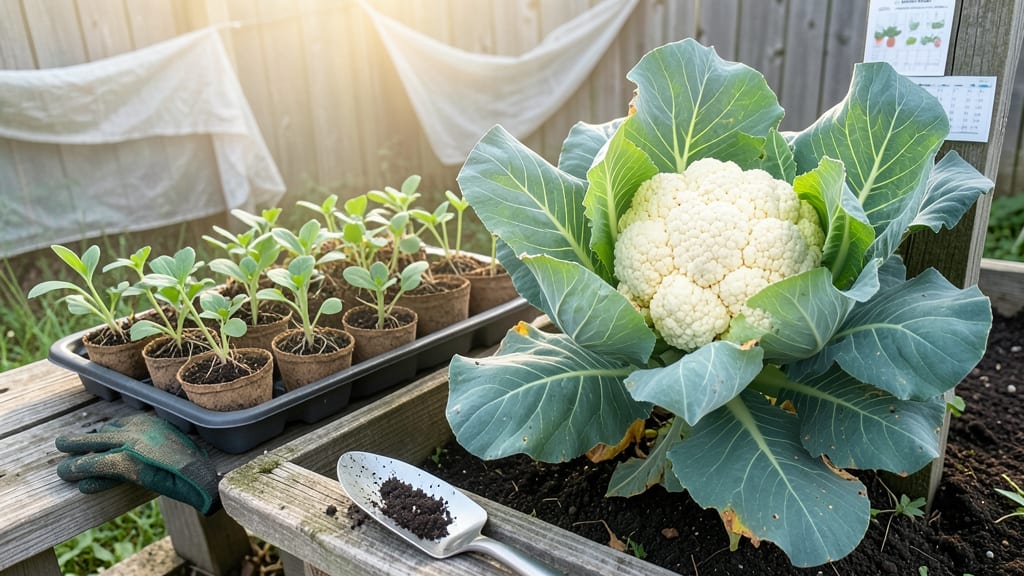
Planting cauliflower in Michigan at the wrong time can turn your garden dreams into a bitter disappointment—this cool-season crop bolts faster than a deer in a cornfield when temperatures climb.
The key to success lies in understanding your local frost dates and soil conditions, because even a single warm spell can send your plants into premature flowering.
I’ve grown cauliflower in Michigan for years, and the difference between a thriving harvest and a failed experiment often comes down to timing.
Whether you’re in the Upper Peninsula or southern Michigan, knowing when to start seeds indoors versus direct sowing can mean the difference between crisp, flavorful heads and tough, stringy disappointment. Let me walk you through the exact windows you need to follow.
Most Michigan gardeners make one of two mistakes: planting too early when the soil is still cold, or waiting too long and facing summer heat. The solution? Start seeds indoors 8-10 weeks before your last frost date, then transplant outdoors when nighttime temperatures stay consistently above 50°F.
For direct sowing, aim for early spring or late summer for a fall harvest—just be ready to protect your plants if warm weather sneaks in.
In this guide, I’ll break down the best planting schedules by region, share my top tips for avoiding bolting, and recommend the most reliable cauliflower varieties for Michigan’s climate. By the end, you’ll know exactly when to plant for a zero-bolt harvest—no guesswork required.
Michigan cauliflower planting zones: when to start indoors vs. direct sowing by county
Michigan’s diverse climate—from the Upper Peninsula’s chilly lakeside breezes to the Southern Lower Peninsula’s warmer springs—means cauliflower planting dates vary wildly. Cauliflower thrives in cool weather but bolts (goes to seed) when temperatures creep above 75°F.
Mastering these county-specific windows ensures you harvest crisp, flavorful heads instead of bitter stalks.
Timing depends on two critical factors: last frost dates and your method—indoor starts (for earlier harvests) or direct sowing (for late-summer crops). In Michigan, indoor starts typically begin 4-6 weeks before your last frost, while direct sowing happens 2-3 weeks after that date. Let’s break it down by region.
Here’s your county-by-county planting guide, including optimal transplant windows and direct-sowing deadlines to avoid bolting. Use this as your zero-bolt roadmap for Michigan gardens.
| Region | Avg. Last Frost | Indoor Start (Weeks Before Last Frost) | Transplant Window | Direct Sow Window | Key Counties |
|---|---|---|---|---|---|
| Upper Peninsula | May 10–20 | 4–6 weeks before (Mar 20–Apr 10) | May 1–15 | May 20–Jun 10 | Keweenaw, Marquette, Iron |
| Northern Lower Peninsula | May 1–10 | 4–5 weeks before (Mar 25–Apr 5) | Apr 25–May 10 | May 15–Jun 5 | Traverse City, Petoskey, Gaylord |
| Southern Lower Peninsula | Apr 20–May 1 | 3–4 weeks before (Mar 20–Apr 1) | Apr 15–Apr 30 | May 1–May 15 | Detroit, Kalamazoo, Ann Arbor |
| Southwest Michigan | Apr 15–25 | 3 weeks before (Mar 15–25) | Apr 10–Apr 20 | Apr 25–May 10 | Grand Rapids, Kalamazoo, Benton |
For Upper Peninsula gardeners, start seeds indoors by March 20 to transplant by May 1. The cooler climate gives you a longer window for late-summer crops—direct sow until June 10.
In contrast, Southern Michigan gardeners must act faster: indoor starts by March 15 and transplant by April 15 to beat the heat.
Pro tip: Use shade cloth if transplanting during May’s unpredictable warm spells. Even a 30% shade cloth can delay bolting by 1–2 weeks in hotter microclimates like Detroit or Kalamazoo. Monitor soil temps—cauliflower roots need 50–60°F to thrive.
Direct sowing works best in Northern Michigan for late-season harvests. Plant after May 15 to avoid early heat waves.
In Southern counties, direct sowing is risky—stick to indoor starts for reliable results. Succession planting every 2 weeks extends harvests into fall, but stop by July 1 to prevent bolting.
County-specific adjustments matter. For example, Marquette’s cooler lakeside climate lets you direct sow until June 10, while Detroit’s urban heat islands may require earlier indoor starts. Check your local USDA zone (typically 5a–6b in Michigan) and microclimate for fine-tuning.
Bolting is your biggest enemy. To avoid it, choose slow-bolting varieties like ‘Snowball Y Improved’ or ‘Purple of Sicily’ and mulch heavily to keep soil cool. Water deeply during dry spells—cauliflower needs 1–2 inches of water weekly.
In July’s heat, provide afternoon shade to buy time for late transplants.
Remember: Michigan’s frost dates shift yearly. Use Almanac.com’s frost calculator to adjust for your exact location. For zero-bolt success, align your planting with these county guidelines and watch your garden produce perfect heads instead of bitter stalks.
Start now, and you’ll be harvesting crisp, flavorful ca
How to avoid bolting: proven tips for Michigan’s unpredictable spring weather
Michigan’s spring weather is famously fickle—one day it’s 50°F and sunny, the next it’s 30°F with frost warnings. This volatility is a cauliflower grower’s nightmare, because even a single warm spell can trigger premature bolting, turning your tender heads into bitter, flowery stalks before harvest.
The key to success? Understanding how temperature swings affect your plants and taking proactive steps to protect them.
Cauliflower thrives in cool, consistent temperatures between 55°F and 70°F. When soil temperatures rise above 75°F or daytime air hits 80°F+, plants bolt—sending up tall, flowery stems instead of forming heads. In Michigan, this often happens in late May or early June, when unpredictable warm fronts arrive.
The good news? With the right strategies, you can delay bolting long enough to enjoy a full harvest.
⚠️ WARNING: Common Mistake Many gardeners assume shade cloth alone will prevent bolting, but it’s only part of the solution. Soil temperature is equally critical—even if your plants are shaded, if the soil heats up, roots will stress and trigger bolting. Combine shade with soil cooling (mulch, drip irrigation) for best results. Purple varieties like ‘Purple of Sicily’ bolt slightly slower than white types, but they’re not foolproof in Michigan’s heat spikes.
Start by selecting slow-to-bolt varieties like ‘Snowball Y Improved’, which tolerates warmer temps better than standard types. This variety matures in 70-80 days, giving you a 2-week window before Michigan’s heat typically peaks.
Pair it with ‘Purple of Sicily’ for a secondary crop—its deep purple heads are visually stunning and slightly more heat-resistant.
Monitor soil temperature with a simple soil thermometer ($10 at garden centers). Ideal planting soil should be 55°F-65°F. If it’s warmer, delay planting or use black plastic mulch to cool the soil.
For transplants, water deeply twice daily during heat waves to keep roots cool. Drip irrigation is far more effective than overhead watering, which can stress leaves and accelerate bolting.
When daytime temps hit 75°F+, deploy 30-50% shade cloth to reduce leaf temperature by 10-15°F. Secure it 3-4 feet above plants to allow airflow and prevent fungal issues.
For extra protection, use row covers during the hottest afternoon hours (2 PM–6 PM). Never use plastic sheeting, as it traps heat and worsens the problem.
Finally, adjust your planting schedule to avoid Michigan’s heat spikes. For southern Michigan (USDA Zone 6), start seeds indoors in early March and transplant by mid-April to harvest before June heat arrives.
In northern Michigan (Zone 4-5), delay until late April for transplants, aiming for a July harvest before fall cools down. Succession plant every 2 weeks for continuous harvests.