
Plants
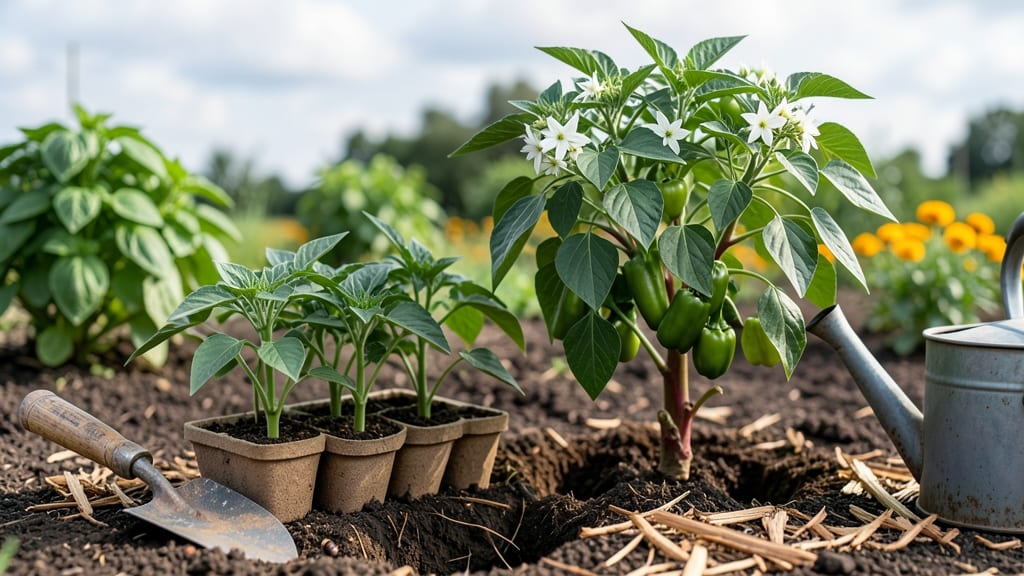
Planting bell peppers 🌶️ in Southern California isn’t just about throwing seeds in the dirt—it’s about mastering the perfect timing to avoid summer heat stress or missed harvests.
With frost-free winters and year-round growing potential, your coastal garden in San Diego and inland plots in Riverside actually have two ideal windows for planting, but getting them wrong can mean the difference between a garden full of peppers and one full of wilting disappointment.
Here’s the secret: coastal areas like Santa Barbara can start as early as late February, while inland zones near Palm Springs should wait until mid-March to let the soil warm up.
But even in our mild climate, soil temperature matters more than the calendar—waiting until it hits 60°F ensures strong root growth before the heat of summer arrives.
What most gardeners miss is that Southern California’s long growing season actually lets you plant twice a year. While spring is the classic time, a second round in late summer can give you peppers through winter—if you pick the right heat-tolerant varieties.
Let me show you exactly how to time it right for your microclimate.
Whether you’re a first-time gardener or a seasoned grower, these region-specific tips will help you avoid common mistakes and maximize your harvest. Ready to turn your garden into a pepper powerhouse?
Optimal bell pepper planting dates by Southern California region (coastal vs inland)
Southern California’s microclimates create a gardening goldmine for bell peppers, but the coastal fog and inland heat demand precise timing. Unlike northern climates, we don’t worry about frost—just soil warmth and heat tolerance.
Coastal areas like Santa Barbara and San Diego can start earlier, while inland valleys like Riverside and Palm Springs must wait for stable warmth to avoid heat stress.
Bell peppers thrive when soil temperatures hit 60°F (15°C) for spring planting or 70°F (21°C) for fall crops. Since Southern California rarely dips below freezing, we focus on heat accumulation rather than frost dates.
Coastal regions benefit from milder nights, while inland areas face intense afternoon sun, requiring shade cloth during peak summer months.
Direct sowing is possible in both regions, but transplanting seedlings gives you a head start. Start seeds indoors 8-10 weeks before your target outdoor date, using grow lights to prevent leggy seedlings. Hardy seedlings can handle cooler coastal nights, but inland areas need extra protection until soil warms completely.
Here’s the breakdown for zero frost risk planting—coastal vs. inland—with exact dates for transplanting and direct sowing:
| 🌶️ Bell Pepper Planting Guide | ||
|---|---|---|
| Region | Coastal (e.g., LA, San Diego) | Inland (e.g., Riverside, Palm Springs) |
| Best Planting Window | February–March (spring) / August–September (fall) | March–April (spring) / September (fall) |
| Transplant Seedlings | Late February–Early March (soil 60°F+) | Mid-March–Early April (soil 70°F+) |
| Direct Sow Seeds | Mid-March–April (after last coastal chill) | April–May (after stable warmth) |
| Soil Temp Requirement | 60°F (15°C) minimum | 70°F (21°C) minimum (inland heat) |
| Key Microclimate Factor | Coastal fog delays warming | Intense afternoon sun (use shade) |
| Heat Tolerance Tip | Choose 'Early California Wonder' (heat-tolerant) | Avoid planting June–August (peak heat stress) |
| Harvest Window | June–October (spring crop) | July–November (spring crop) |
🌱 Note: Coastal areas can attempt a fall crop in September, but inland regions risk early winter chill.
For coastal gardens, I recommend starting seedlings indoors in January to transplant by late February. The Santa Ana winds can dry out young plants, so mulch heavily with straw or wood chips to retain moisture.
Inland growers should wait until mid-March to avoid heat stress—even heat-tolerant varieties like 'NuMex Sandia' struggle when daytime temps exceed 95°F (35°C).
Succession planting works beautifully in Southern California. After your first harvest in June–July, replace spent plants with new seedlings for a fall crop. Coastal areas can extend this into October, while inland gardens should finish by September to avoid cooler nights.
Use black plastic mulch to warm soil faster in spring or reflective mulch to reduce inland heat stress.
One common mistake is planting too early in coastal areas without checking soil temperature. A soil thermometer is your best friend—wait until readings hit 60°F (15°C) at 6 inches deep.
Inland gardens often overwater during summer, thinking peppers need more moisture when they’re actually heat-dormant. Reduce watering when daytime temps exceed 90°F (32°C) to prevent blossom-end rot.
Pro tip: Heat-tolerant varieties like 'Carmen' or 'Jupiter' thrive in inland heat, while 'Aristotle' performs well in coastal fog. If you’re in San Diego County, try 'Sweet Banana' for its disease resistance. For Riverside or Palm Springs, 'NuMex Rna' handles 100°F+ days better than most varieties.
Remember, Southern California’s long growing season means you can grow peppers year-round with the right timing. Start early in coastal areas, wait for warmth inland, and always monitor soil moisture and temperature. With these guidelines, you’ll enjoy homegrown peppers from spring to fall—no frost worries here! 🌶️
How to extend your bell pepper growing season in Southern California
Southern California’s frost-free winters and long growing windows let you grow bell peppers year-round—but only if you use the right tricks. I’ve learned that coastal areas like San Diego can push harvests into December, while inland valleys like Riverside can start as early as January.
The key is protecting plants from cold snaps and avoiding summer heat stress.
My favorite method is succession planting, where I stagger plantings every 2-3 weeks from February through September. This ensures a continuous pepper supply without gaps. Pair that with heat-tolerant varieties like 'California Wonder' or 'NuMex RNaky', and you’ll avoid the blossom drop that hits during summer’s 100°F+ days.
🌱 numbered highlights
- 1 Start early in coastal areas (Jan-Feb) with cold frames to push harvests to December.
- 2 Use row covers (floating fabric) for fall/winter protection—removes when temps hit 75°F.
- 3 Avoid summer planting (June-August) due to heat stress—opt for shade cloth if attempting.
- 4 Succession plant every 2-3 weeks from February to September for nonstop harvests.
- 5 Choose heat-tolerant varieties like 'Aristotle' or 'Carmen' for summer/fall crops.
For fall/winter extensions, I swear by low tunnels or mini greenhouses. These raise soil temps by 5-10°F, letting me grow peppers until January in coastal zones. Just remove the cover during the day in mild weather to prevent overheating.
I also mulch heavily with straw to insulate roots—this keeps soil temps stable even when nights dip to 45°F.
One mistake I made early on was planting too early without protection. Coastal fog can linger into April, and damp soil + cold nights = fungal diseases.
Now, I wait until soil temps hit 60°F (test with a thermometer!) and use black plastic mulch to warm the ground faster. This cuts the time to maturity by 2-3 weeks.
Don’t forget watering strategies—bell peppers hate fluctuating moisture. In summer, I drip-irrigate at dawn to avoid evaporation, while in winter, I reduce watering to every 5-7 days. Overwatering in cool weather leads to root rot, which is a nightmare to fix.
Pair this with balanced fertilizer (10-10-10) every 4-6 weeks, and your plants will reward you with thicker walls and sweeter peppers.
If you’re in inland areas, focus on shade cloth during peak summer (30-50% shade) to prevent blossom end rot. I’ve had success with white shade cloth—it blocks UV while allowing airflow.
And always harvest regularly to encourage new fruit set. With these tricks, I’ve extended my harvest from June to February—no frost, no stress!