
Trees
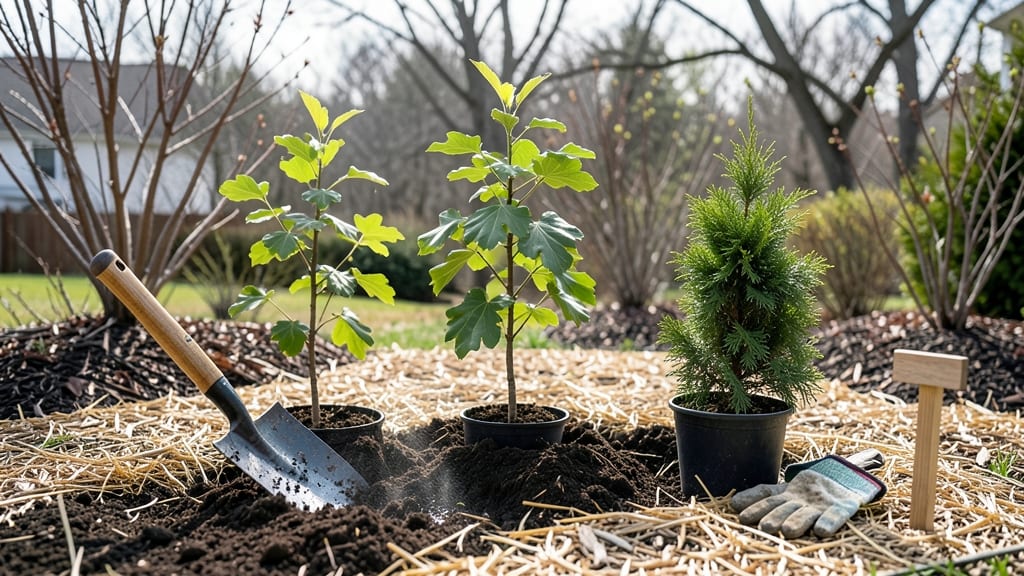
Planting a tree in Oklahoma at the wrong time could mean watching it struggle—or worse, die—before it ever gets a chance to grow strong roots.
The best time to plant trees in Oklahoma isn’t just about the calendar; it’s about soil warmth, frost-free windows, and knowing your hardiness zone (whether you’re in 6b, 7a, or 8a).
Most gardeners assume spring is the only option, but fall actually gives young trees a head start by letting them establish roots before winter’s chill.
In Oklahoma, that means digging in between October and November—or, if you prefer, early spring from March to April—when soil temperatures hit that sweet spot of 60°F+.
Why does timing matter so much? Because a tree planted too early faces frost damage, while one planted too late misses critical root growth.
I’ll break down the exact windows for Oklahoma’s regions, plus how to prep your soil and choose the right species—whether you’re planting a drought-resistant redbud or a towering pecan.
Ready to give your tree the best shot at thriving? Let’s dive into the science behind Oklahoma’s planting seasons and how to avoid common mistakes that derail even the most well-intentioned gardeners.
Oklahoma’s ideal tree planting window: soil temperature & frost-free dates
Oklahoma’s climate creates a unique challenge for tree planting—too early risks frost damage, while late planting can stunt root growth. The perfect window depends on your USDA zone (6b–8a) and soil temperature, which must reach 60°F+ for optimal root establishment.
Let’s break down the science-backed timing for your region, using data from Oklahoma State University and USDA.
Most Oklahoma gardeners swear by fall or early spring planting, but the exact dates shift from northern Oklahoma’s 6b zone (where frost lingers until April 30) to southern Oklahoma’s 8a zone (where the last frost typically arrives by March 15).
Evergreens like Pines and Cedars need extra care—plant them 6–8 weeks before first frost to avoid winter stress.
Soil temperature is the secret weapon in Oklahoma’s planting success. A soil thermometer (available for ~$15) reveals when your yard is ready: 60°F+ triggers root growth, while below 50°F can shock young trees. In central Oklahoma (Zone 7a), this usually means mid-March to early April for spring planting.
Here’s the golden rule: Plant bare-root trees in late fall (October–November) when soil is still warm but frost isn’t imminent. For container-grown trees, early spring (March–April) works best—just avoid peak heat (June–August), which causes transplant shock.
Regional frost-free dates vary wildly:
- Northern OK (6b): Last frost April 15–30, first frost October 15–30
- Central OK (7a): Last frost March 15–April 15, first frost November 1–15
- Southern OK (8a): Last frost February 15–March 15, first frost November 15–December 1
| Region | USDA Zone | Ideal Planting Window | Soil Temp Requirement | Last Frost Date | First Frost Date |
|---|---|---|---|---|---|
| Northern OK | 6b | Late April–May or Oct 1–15 | 60°F+ (mid-April) | April 15–30 | October 15–30 |
| Central OK | 7a | March 15–April 15 or Sept 15–Oct 15 | 60°F+ (early March) | March 15–April 15 | November 1–15 |
| Southern OK | 8a | February 15–March 15 or Sept 1–Oct 15 | 60°F+ (late February) | February 15–March 15 | November 15–December 1 |
For Oklahoma’s iconic trees like Redbuds or Pecans, timing matters even more. Redbuds (native to OK) should go in early spring to beat late frosts, while Pecan trees thrive when planted in late winter (January–February) for deep root establishment before summer heat arrives.
Pro tip: Use mulch (3–4 inches) to regulate soil temperature—it keeps roots 5–10°F warmer in winter and cooler in summer. This extends your planting window by 2–4 weeks in both spring and fall. Just avoid piling mulch against the tree trunk to prevent rot.
If you’re in western Oklahoma (Panhandle), where Zone 6b rules, aim for May planting—the soil warms faster there, and summer rains help young trees establish. Meanwhile, eastern OK’s humidity (Zone 7b–8a) means fall planting is ideal to avoid fungal diseases that thrive in wet springs.
Remember: Container-grown trees are more flexible—they can handle
How to adjust planting timing for Oklahoma’s microclimates & tree types
Oklahoma’s diverse microclimates—from the arid Panhandle to the humid Eastern forests—mean planting timing varies dramatically. In the Panhandle (Zone 6b-7a), where winters are colder and summers scorching, your oaks and pines need a narrower window.
Meanwhile, Eastern Oklahoma (Zone 7b-8a) offers a longer fall planting season thanks to milder winters. Understanding these differences helps you avoid transplant shock and maximize root establishment.
For oaks and fruit trees, timing is critical—planting too early risks frost damage, while late planting can stunt growth. In Northern Oklahoma, aim for late April to early May when soil temps hit 60°F.
In Southern Oklahoma, you can extend planting into early December before the first frost. Pines and drought-resistant species like mesquite are more forgiving but still benefit from cooler fall months.
- 🌿 Panhandle (Zones 6b-7a): Plant oaks and pines in late April–early May or October–November for best root growth.
- 🍎 Fruit Trees (Pecan, Persimmon): January–February (bare-root) or November–December (container-grown) to avoid spring frost.
- 🌳 Eastern OK (Zones 7b-8a): Extend fall planting to early December; spring planting works until mid-April.
- 💧 Drought-Resistant Trees (Mesquite, Chinaberry): Plant in fall or early spring; avoid summer heat stress.
- 🪴 Mulch Tip: Apply 3–4 inches of mulch after planting to retain moisture and extend your planting window by 2–3 weeks.
Mulching is your secret weapon for extending Oklahoma’s planting windows. A 3–4 inch layer of mulch (wood chips or straw) keeps soil cooler in summer and warmer in winter, giving young roots a fighting chance.
For bare-root trees, mulch immediately after planting to prevent soil from drying out—critical in the Panhandle’s dry winds. In Eastern Oklahoma’s clay soils, mulch also improves drainage, reducing the risk of root rot.
If you’re planting shade trees like hackberries or elms, prioritize fall planting—these trees establish roots quickly before winter dormancy. In contrast, evergreens like pines should go in early spring to avoid winter desiccation.
For fruit trees, Oklahoma State University recommends January–February for bare-root varieties, as cooler temps reduce transplant shock. Always check local frost-free dates—the Panhandle’s last frost can linger until April 30, while Southern Oklahoma may see frost as late as March 15.
Don’t overlook soil preparation—Oklahoma’s clay-heavy soils in the east and sandy loams in the west require amending with compost before planting. Work in organic matter to improve moisture retention, especially for drought-prone species.
After planting, water deeply once a week for the first month, then taper to every 10–14 days once roots establish. This routine works for both spring and fall plantings, ensuring your trees thrive regardless of Oklahoma’s unpredictable weather.
For container-grown trees, you have more flexibility—plant anytime soil isn’t frozen, but avoid peak summer heat (June–August) when roots struggle to adapt. If you miss the ideal window, mulch and water consistently to give your tree a head start.
With these adjustments, your oaks, pines, and fruit trees will grow strong, no matter where in Oklahoma you’re planting. 🌱