
Trees
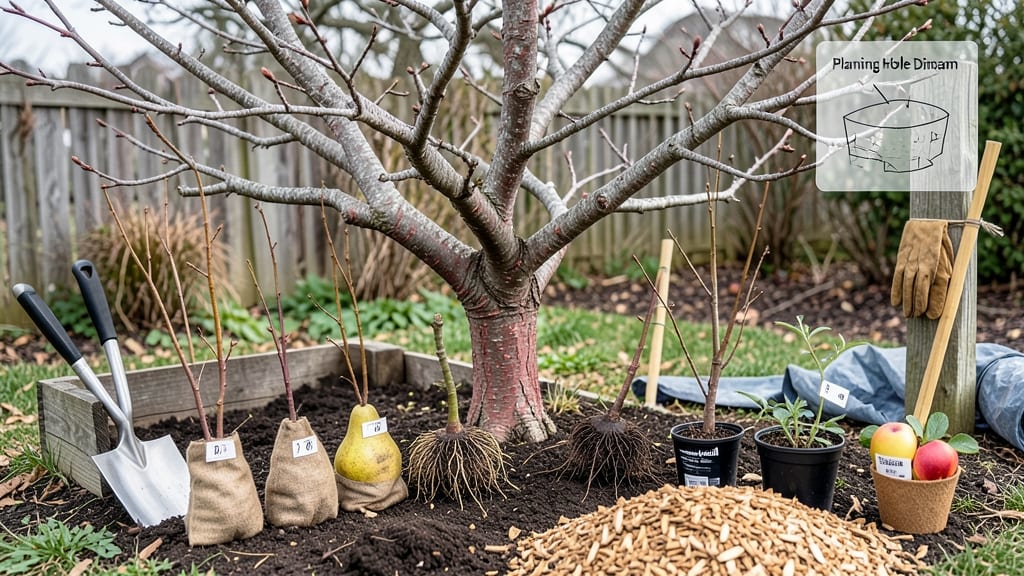
Timing your fruit tree planting in Illinois isn't just about picking a month—it's about giving your 🍎 the best shot at thriving through winter's freeze and summer's heat.
Planting too early or too late can leave young trees vulnerable, especially in USDA Zones 5-6 where frost lingers into April and returns by October.
I've seen firsthand how a well-timed planting transforms a struggling orchard into one that produces fruit for decades. The key is understanding when your local soil warms enough for roots to establish before dormancy kicks in.
Whether you're planting bare-root saplings in spring or container-grown trees in fall, getting this right makes all the difference.
Most Illinois gardeners swear by early spring (March-April) planting when the ground is workable but before buds break. But fall (October-November) can also work if you choose the right varieties and protect young trees from early frosts.
Let me show you exactly which months work best for your specific zone and tree type.
You'll discover how to read your local frost dates, prepare your soil for maximum root growth, and select varieties that handle Illinois' unpredictable weather. With these insights, you'll avoid common mistakes that lead to stunted trees or worse—and set yours up for a lifetime of harvests.
Best planting months for fruit trees in Illinois by USDA Zone
Illinois spans USDA Zones 5 and 6, where timing is everything for fruit tree success. Planting too early risks frost damage, while waiting too long delays root growth. The best windows are early spring (March-April) or fall (October-November), when soil is workable but not frozen.
Let’s break down the ideal months for apples, peaches, cherries, and pears to ensure strong establishment.
In Zone 5 (northern Illinois), aim for late March to early April in spring or mid-October to early November in fall. Zone 6 (southern Illinois) offers a slightly longer window: early March to mid-April or late October to mid-November.
These ranges align with average last frost dates and give roots time to harden before winter. For bare-root trees, spring planting is ideal, while container-grown trees thrive in fall.
| Fruit Type | Best Planting Months | USDA Zone 5 | USDA Zone 6 | Key Notes |
|---|---|---|---|---|
| Apples | March-April (Spring) / October-November (Fall) | Late March-Early April | Early March-Mid-April | Dwarf varieties adapt better to Zone 5 |
| Peaches | March-April (Spring) / October (Fall) | Early April | Late March-April | Avoid late fall; needs winter chill |
| Cherries | Late March-April (Spring) | Early April | Late March-April | Sweet cherries need Zone 6; sour cherries tolerate Zone 5 |
| Pears | March-April (Spring) / October (Fall) | Late March-April | Early March-April | Fall planting works best for container-grown trees |
For spring planting, focus on bare-root trees in March-April. These trees enter dormancy naturally, so they survive transplant shock better. If you choose container-grown trees, plant them in early spring to give roots time to adjust before summer heat.
In Zone 5, wait until soil temperatures rise above 40°F to avoid frost damage to tender roots.
Fall planting in October-November is ideal for container-grown trees because they establish roots before winter dormancy. In Zone 6, you can plant as late as mid-November, but avoid planting when soil temps drop below 45°F.
Water deeply after planting to encourage root growth before the ground freezes. Mulch heavily (3-4 inches) to insulate roots during winter.
Peaches and cherries are most sensitive to timing. Peaches need 600-900 chill hours (Zone 5-6 meets this), but planting too late in fall can delay dormancy.
Cherries, especially sweet varieties, prefer Zone 6 and should be planted in early spring to avoid winter stress. Apples and pears are more flexible but still benefit from early spring or fall planting.
Avoid planting in summer or late fall. Summer heat stresses young trees, while late fall planting risks root freeze before dormancy sets in. If you miss the ideal windows, container-grown trees can be planted in early May, but expect slower initial growth.
Always check local frost dates—Illinois Extension provides updated maps for your county.
After planting, water consistently for the first 2-3 years to build deep roots. In Zone 5, protect young trees with tree wraps or burlap shields during winter to prevent sunscald and rodent damage.
In Zone 6, focus on soil moisture retention during dry spells. With the right timing, your fruit trees will thrive and bear fruit in 3-5 years.
For extra confidence, test your soil’s pH (6.0-7.0 ideal) and drainage before planting. Amend with compost or peat moss if needed. Illinois’ clay-heavy soils benefit from sand or organic matter to improve aeration. Don’t rush—patience in planting pays off with decades of harvests.
🌱
How to prepare Illinois soil and site for fruit tree planting success
Preparing your Illinois soil and site is just as critical as choosing the right planting time. Fruit trees need well-draining, nutrient-rich soil to thrive in our USDA Zones 5-6.
Start by testing your soil’s pH level—most fruit trees prefer a slightly acidic to neutral range of 6.0 to 7.0. You can grab a soil test kit from your local University of Illinois Extension office or send a sample to a lab for precise results.
Once you have your results, amend the soil with organic matter like compost or well-rotted manure. Illinois’ clay-heavy soils often benefit from adding sand or peat moss to improve drainage. Work these amendments into the top 12 to 18 inches of soil, where your tree’s roots will establish.
This step is especially important if your yard has poor drainage or sits in a low-lying area.
⚠️ callout warning
⚠️ Avoid These Illinois Planting Pitfalls
- Planting too early – Frozen soil prevents root growth; wait until soil temps reach 45°F+.
- Skipping drainage tests – Waterlogged soil suffocates roots; dig a 12-inch hole and fill it with water to check drainage.
- Ignoring wind exposure – Young trees need protection from Illinois’ harsh winds; plant near a fence or use a windbreak.
- Over-fertilizing at planting – Too much nitrogen burns roots; use a balanced 10-10-10 fertilizer sparingly.
These mistakes can delay fruiting by years—or worse, kill your tree before it matures.
Next, choose a planting site with full sun exposure—at least 6 to 8 hours daily. In Illinois, south-facing slopes get the most sunlight, but avoid areas prone to late spring frosts, which can damage blossoms.
If your yard lacks ideal sun, consider dwarf or semi-dwarf varieties like Honeycrisp apples or Montmorency cherries, which adapt better to partial shade.
Before planting, loosen the soil in a 3-foot-wide circle around your planting hole to encourage root spread. Remove any weeds or grass within this area, as they’ll compete with your young tree for nutrients.
If your soil is compacted, aerate it further with a garden fork. For heavy clay soils common in Illinois, consider planting in a raised bed or mound to improve drainage and root development.
Don’t forget to protect your new tree from Illinois’ winter extremes. After planting, apply a 3-inch layer of mulch around the base (but keep it 6 inches away from the trunk to prevent rot).
Use wood chips or straw, which insulate roots and retain moisture. For young trees, wrap the trunk with tree guard or burlap to shield it from voles and freezing winds.
Finally, stake your tree if it’s tall or top-heavy, but only if necessary—over-staking can restrict root growth. Use soft ties to avoid damaging the trunk, and remove stakes after 1 to 2 years to encourage natural stability.
With these steps, your fruit tree will establish strong roots and reward you with abundant harvests for decades. 🌳