
Flowers
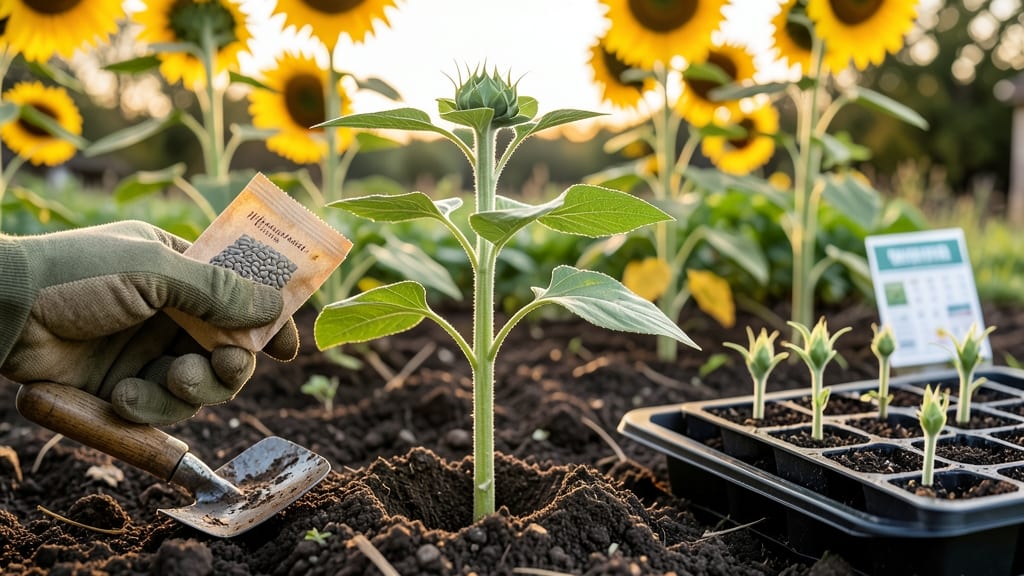
Planting sunflowers in Michigan means catching that sweet 30-day window between last frost and summer heat—because timing this wrong could leave you with sad, stunted 🌻 stalks instead of sunlit giants.
I’ve learned the hard way that Michigan’s 5b-6b zones demand patience: rushing seeds into cold soil or waiting too long risks frost damage or bolting before flowering.
The key is knowing your county’s last frost date (usually around April 15 in most areas) and adjusting for microclimates—urban heat islands warm up faster than rural fields.
Whether you’re growing dwarf varieties for containers or towering giants for cut flowers, this guide breaks down exactly when to start seeds indoors (if at all) and when to direct-sow for maximum success. We’ll also cover soil prep tricks to give your sunflowers the strong start they need.
Ready to avoid the most common mistakes? Let’s dive into Michigan’s planting calendar—so you can enjoy those golden blooms from July through October without the guesswork.
Michigan’s last frost dates by region: best sunflower planting windows
Michigan’s last frost dates vary dramatically from the Upper Peninsula to southern counties, creating a 3-4 week window for sunflower planting. Since sunflowers (Helianthus annuus) are warm-season annuals, planting too early risks frost damage, while late planting may delay blooms until fall.
Understanding your USDA Zone (4-6) and local frost patterns is key to maximizing your sunflower harvest.
Sunflowers thrive with 60-90 frost-free days to mature, so timing your direct sowing after the last frost ensures strong stems and vibrant blooms.
In Zone 5b (northern Michigan), this typically means waiting until May 15-June 1, while Zone 6b (southern Michigan) gardeners can start as early as April 20-May 10. Always check local frost records—some years can bring late frosts even in warmer zones.
Here’s a region-specific breakdown of Michigan’s last frost dates and ideal sunflower planting windows. Use this as your guide to avoid frost-sensitive seedlings and ensure your sunflowers reach their full 3-14 foot potential.
| Region | USDA Zone | Avg. Last Frost | Ideal Planting Window | Notes |
|---|---|---|---|---|
| Upper Peninsula (e.g., Marquette, Houghton) | 4b-5a | May 20-June 1 | June 1-15 | Short season; choose dwarf varieties (e.g., 'Teddy Bear') for earlier blooms. |
| Northern Lower Peninsula (e.g., Traverse City, Gaylord) | 5b | May 10-20 | May 20-June 10 | Use row covers for early starts; monitor soil temps (aim for 50°F+). |
| Central Michigan (e.g., Lansing, Grand Rapids) | 5b-6a | April 25-May 10 | May 10-June 1 | Best for standard varieties (e.g., 'Moulin Rouge'); extend season with black plastic mulch. |
| Southern Michigan (e.g., Detroit, Ann Arbor, Kalamazoo) | 6a-6b | April 15-25 | April 20-May 15 | Early enough for giant varieties (e.g., 'Russian Giant'); watch for late spring frosts. |
| Southwest Michigan (e.g., Kalamazoo, Benton Harbor) | 6b | April 10-20 | April 25-May 10 | Warmest zone; can plant tall varieties (e.g., 'Autumn Beauty') for late-season blooms. |
🌱
For urban gardeners or those in microclimates (like near large bodies of water), adjust your planting window by 1-2 weeks later. These areas can experience delayed soil warming or unpredictable frosts. Always use a soil thermometer—sunflowers won’t germinate well in cold soil (<50°F).
If you’re starting seeds indoors, begin 4-6 weeks before your region’s last frost date. Sunflowers grow quickly, so avoid overcrowding seedlings—they need 12-24 inches of space at maturity. Transplant outdoors after hardening off for 7-10 days to prevent transplant shock.
In Zone 4b-5a (Upper Peninsula), focus on early-maturing varieties like 'Little Becka' (60 days) or 'Sunspot' (65 days). These can bloom before frost and still produce edible seeds.
In warmer zones, you can experiment with late-summer plantings (July) for fall blooms, though they may not reach full height.
Pro tip: Use black plastic mulch or straw mulch to warm soil faster and extend your planting window by 1-2 weeks. This is especially helpful in northern Michigan, where cool soils delay germination.
Always remove mulch once plants are 6 inches tall to prevent rot at the stem base.
Remember, sunflowers are frost-tolerant as seedlings but not as mature plants. A late frost after 6 inches of growth can stunt blooms or kill plants entirely. Monitor your local weather and
How to adjust planting time for sunflower varieties and soil conditions
Michigan’s cool soil temperatures and late spring frosts demand flexibility in sunflower planting. I’ve learned the hard way—planting too early means frost-damaged seedlings, while waiting too long cuts your blooming season short. The key? Adjusting for soil warmth and sunflower maturity (dwarf vs. giant varieties).
For dwarf varieties (1–3 ft tall), like ‘Teddy Bear’ or ‘Moulin Rouge,’ I start seeds indoors 2–3 weeks before Michigan’s last frost date (typically mid-April). These compact beauties mature faster (60–75 days), giving them a head start in cooler regions like USDA Zone 4 (northern Michigan).
Giant varieties like ‘Mammoth’ or ‘Russian Giant’ (10–14 ft tall) need longer growing seasons (90–120 days). I direct-sow these after Memorial Day when soil temperatures consistently hit 55°F+. In Zone 5–6 (southern Michigan), this means waiting until mid-May to avoid frost risks.
Soil temperature is non-negotiable—sunflower seeds won’t germinate below 50°F. I use a soil thermometer to confirm warmth before planting. In colder counties (e.g., Marquette or Traverse City), I extend the season by starting dwarf varieties under grow lights in March and transplanting after frost.
Indoor Seed Starting
- Pros: Earlier blooms, better for short seasons
- Cons: Requires grow lights, risk of leggy seedlings
Direct Sowing Outdoors
- Pros: Hardier plants, no transplant shock
- Cons: Limited to frost-free windows, slower growth
In northern Michigan, I prioritize fast-maturing varieties (e.g., ‘Autumn Beauty’ at 70 days) to ensure blooms before first frost (mid-October). For southern Michigan, I push the envelope with later plantings (even early July) for fall color, but only with drought-tolerant varieties like ‘ProCut’.
Pro tip: Use black plastic mulch to warm soil faster—this can shave 2–3 weeks off your planting timeline. I also group sunflowers with warm-season veggies (like beans) to maximize heat retention in the soil.
For container gardening, I start seeds in biodegradable pots and transplant directly into large containers (2+ gallons) to avoid root disturbance.
Remember, sunflowers thrive on heat—the more sun and warmth, the taller and showier they’ll grow. Adjust your timing based on your microclimate: urban areas warm faster than rural spots, and south-facing gardens get a head start.
With these tweaks, you’ll have sunflowers reaching for the sky all summer long. 🌻