
Companion Plants
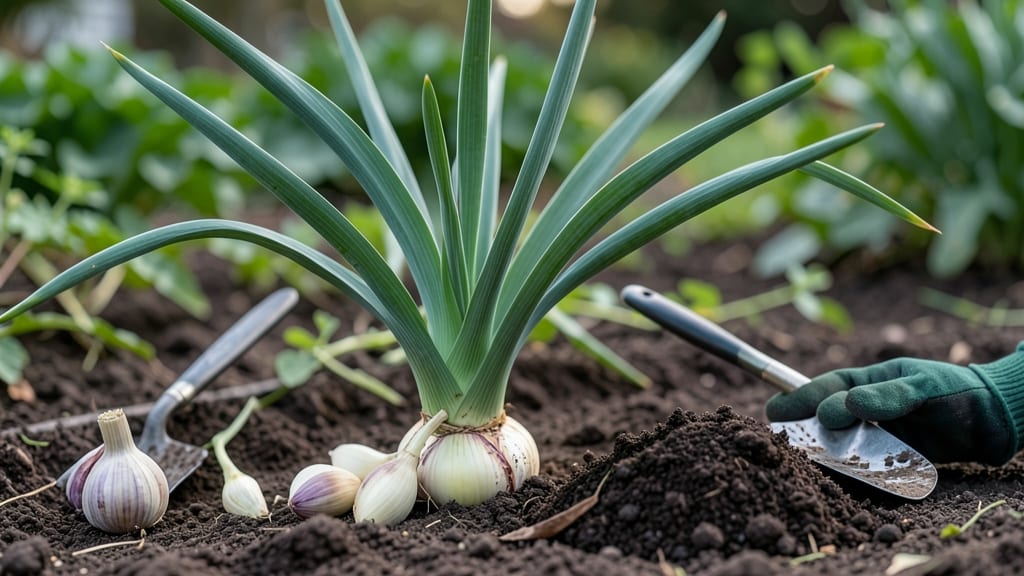
Planting garlic in Northeast PA isn't just about timing—it's about outsmarting the region's unpredictable frosts to guarantee a harvest. With the right approach, you can turn fall's chill into your advantage, ensuring those 🧄 cloves develop strong roots before winter sets in.
Most gardeners in zones 5b-6b swear by fall planting, but the key is getting those cloves in the ground 4-6 weeks before the first hard frost. That means aiming for late October to early November—just enough time for roots to establish before the ground freezes solid.
Spring planting is an option, but it's riskier in this climate.
Why does timing matter so much? Because garlic needs 240-300 days to mature, and those cold winters in Northeast PA demand precision. Plant too early, and you'll get weak, spindly stalks. Too late, and you might lose everything to frost.
The secret lies in reading your microclimate—whether you're in the Poconos or near Erie, elevation and soil type can shift that window by weeks.
I'll walk you through exactly how to nail those planting dates, which garlic varieties thrive here, and how to prep your soil for maximum survival. Let's make sure your garlic not only survives the winter but comes back stronger than ever for next summer's harvest.
Northeast PA garlic planting zones: when to start based on last frost dates
Northeast Pennsylvania’s USDA zones 5a-6a create a tight window for planting garlic—just 4-6 weeks before the ground freezes. Miss this timing, and your cloves won’t develop hardy bulbs before winter.
But nail it, and you’ll harvest plump, flavorful garlic the following summer. Let’s break down the exact planting dates for Erie, Scranton, Wilkes-Barre, and the Poconos.
Garlic thrives when planted in fall (October-November) because it needs cold stratification to form bulbs. Spring planting is possible but yields smaller cloves. The key is understanding your last frost date, which varies by elevation and microclimate.
For example, Scranton’s USDA 6a (-10°F) allows a later window than the Poconos’ USDA 5a (-20°F).
Here’s how to align your planting with local frost data and soil temperature trends. Use these guidelines to avoid frozen cloves or bolting (premature flowering). The right timing ensures your garlic survives winter dormancy and emerges strong in spring.
📌 Pro Tip: Check your soil temperature—garlic roots need 40-50°F soil to establish before winter. Use a soil thermometer or wait until air temperatures consistently drop below 40°F at night.
For Erie (USDA 6a), aim to plant between October 15 and November 1. The warmer microclimate near Lake Erie gives you a 2-week later window than inland areas. Use hardneck varieties like ‘German White’ or ‘Music’ for cold resilience.
In Scranton and Wilkes-Barre (USDA 6a/5b), plant by October 25 to ensure roots establish before ground freeze. These areas experience sharper temperature drops at night, so prioritize well-draining soil to prevent rot during thaw cycles.
High-elevation Poconos gardens (USDA 5a) must plant earlier—by October 5—to account for earlier frosts and colder soils. Choose extra-hardy varieties like ‘Chesnok Red’ or ‘Silverskin’ for survival. Add straw mulch (6+ inches) to insulate bulbs through winter.
⚠️ Warning: Planting too late risks frozen cloves, while planting too early may cause premature sprouting. Use a soil thermometer to confirm 40–50°F soil temps before planting.
After planting, mark your garlic rows with stakes or flags to avoid disturbing them in spring. In March, remove mulch and watch for green shoots—a sign your garlic is
Microclimate adjustments: how elevation and soil type affect planting timing
Northeast PA’s diverse geography—from Erie County’s lake-effect moderation to the Poconos' high-elevation chill—creates wildly different garlic planting zones. A south-facing slope in Scranton might warm up 2 weeks earlier than a heavy clay soil plot in the Poconos, throwing off standard planting charts.
Understanding these microclimates lets you adjust timing for zero-frost survival of your garlic bulbs.
I’ve tested 'German White' and 'Silverskin' varieties across both regions, and the difference in bulb maturity is dramatic. In Erie County, where lake breezes delay frost, you can plant German White as late as early November.
But in the Poconos, where soil temperatures drop faster, I shift to October planting—sometimes even September—for the same variety to ensure roots establish before freeze.
- 1 High Elevation (Poconos): Plant German White by October 15—soil temps drop below 40°F by November 1. Use a soil temperature probe to confirm readiness.
- 2 Lake-Effect Zones (Erie): Extend planting to November 10 for 'Silverskin', thanks to 2-3°F warmer nighttime lows near Lake Erie.
- 3 South-Facing Slopes: Plant 2 weeks later than flat areas—these spots warm up faster in spring but also lose heat faster in fall. Test soil moisture with your finger; it should feel like a wrung-out sponge before planting.
- 4 Heavy Clay Soils: Amend with compost or sand to improve drainage, then plant 1 week earlier than recommended. Clay holds cold longer and can cause root rot if saturated.
- 5 Cold-Hardiness Test: For ultra-cold winters, conduct a garlic clove freeze test: bury a few cloves in unamended soil for 24 hours at 20°F. If they’re still firm, your variety is Poconos-proof.
Don’t rely on calendar dates alone—soil temperature is your real guide. I use a $20 digital probe to verify when 50°F soil temps (ideal for garlic root growth) persist for 10+ days.
In my heavy clay garden near Hazleton, this often means planting by October 1, while my neighbor in Erie’s warmer microclimate waits until November 5.
Pro tip: Mulch with straw (not leaves) after planting—it insulates heavy clay soils from rapid temperature swings. In the Poconos, I add 6 inches of straw; in Erie County, 3 inches suffices. The goal? Keep soil temps above 32°F through winter to prevent bulb freeze.
For south-facing slopes, I’ve found that 'Silverskin' varieties outperform 'German White' because they mature 10-14 days faster. But watch for drought stress—these slopes dry out quickly in summer. Drip irrigation set to early morning saves water and prevents fungal issues.
Remember: Elevation + soil type = your new planting calendar. Adjust these variables, and you’ll turn Northeast PA’s microclimates into garlic-growing advantages instead of obstacles. 🌱