
Trees
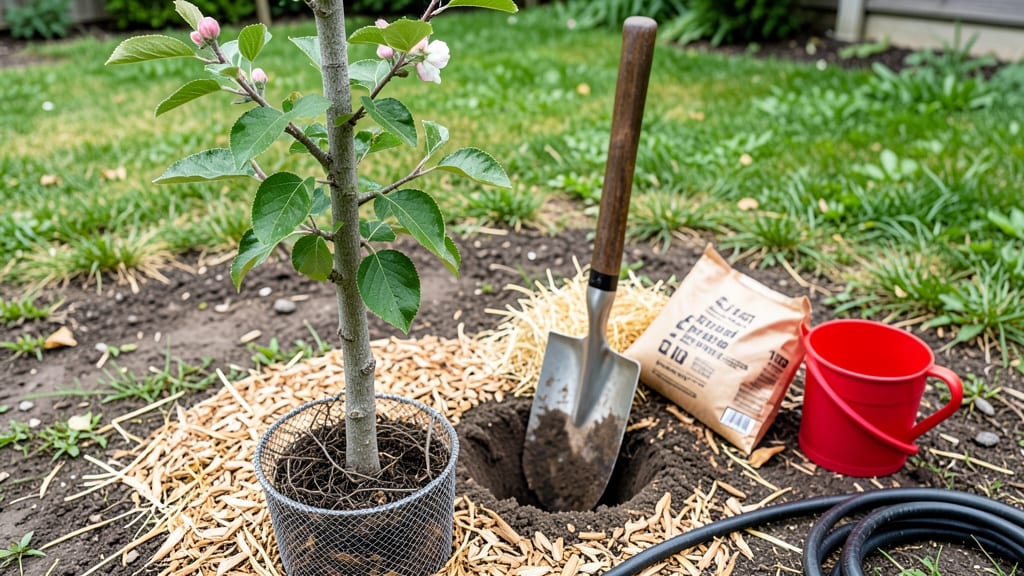
Planting an apple tree 🍎 in Alabama’s warm climate isn’t just about grabbing a sapling and sticking it in the ground—it’s about matching the right variety to your zone’s chill hours.
With the right timing, you can grow fruit-bearing trees that thrive in Zones 7a-8b, but get it wrong, and you might end up with a tree that never blooms.
Most gardeners in Alabama plant their apple trees in late winter or early spring, but the best window depends on whether you’re growing high-chill or low-chill varieties.
The key is to plant before buds swell—typically between February and March—when the soil is workable but the risk of late frosts has passed.
Why does timing matter so much? Alabama’s mild winters mean many traditional apple varieties won’t get enough cold hours to set fruit. That’s where chill-hour matching comes in—choosing the right type of tree for your specific microclimate can make all the difference between a bountiful harvest and disappointment.
In this guide, I’ll walk you through the best planting times, how to pick the perfect variety for your Alabama yard, and the post-planting care tips that’ll set your apple tree up for success. Let’s get growing!
Best planting times for Alabama apple trees by chill-hour needs
Alabama’s mild winters and warm springs make planting apple trees a chill-hour-sensitive decision. Most traditional apple varieties need 500–1,000 chill hours to bloom, but Alabama’s Zones 7a–8b typically offer only 300–600 chill hours. This means choosing the right planting window and low-chill varieties is critical for success.
Your best bet is to plant bare-root trees in late winter (February) or early spring (March) before buds swell. This timing ensures roots establish before Alabama’s last frost (mid-March), while avoiding summer heat stress. Container-grown trees can also be planted in fall (October–November), but they’ll need winter protection.
Here’s how to match your apple variety’s chill-hour needs with Alabama’s climate for maximum fruit production:
| Variety | Chill-Hour Needs | Best Planting Window | Why It Works |
|---|---|---|---|
| Fuji | 600–800 hrs | Late Feb–Early March | Needs more chill hours; plant early for root establishment. |
| Gala | 400–500 hrs | Early Feb–Late March | Moderate chill needs; ideal for Alabama’s shorter winters. |
| Pink Lady | 500–700 hrs | Mid-February | Balanced chill needs; plant before bud break. |
| Anna | 300–400 hrs | Late Feb–Early April | Low-chill; perfect for Alabama’s warm winters. |
| Dorsett Golden | 350–450 hrs | Early March–April | Heat-tolerant; plant after last frost risk. |
For bare-root trees, aim to plant within 2–3 weeks of purchase to prevent root desiccation. Dig a hole twice as wide as the root ball but no deeper, then backfill with native soil mixed with compost for better drainage. Water deeply immediately after planting to eliminate air pockets.
If you miss the February–March window, container-grown trees can be planted in fall (October–November), but mulch heavily to protect roots from freezing. Avoid planting in summer (June–August)—Alabama’s heat stresses young trees, reducing survival rates.
Pro tip: Use a chill-hour calculator (like the one from the University of Georgia Extension) to confirm your local chill hours. Some northern Alabama counties (like Madison or Huntsville) may have slightly higher chill hours than southern areas like Mobile or Dothan.
After planting, prioritize consistent moisture for the first 6–8 weeks—deep watering once a week is ideal. Mulch with wood chips (3–4 inches) to retain soil moisture and regulate temperature. Avoid overwatering, as soggy soil can lead to root rot in Alabama’s humid climate.
Monitor your tree’s growth closely in spring. If buds don’t swell by April, your tree may need a second-year chill accumulation or a different variety better suited to your microclimate. Adjust care accordingly—patience is key!
🍎
How to choose low-chill apple varieties for Alabama’s climate
Alabama’s mild winters and warm springs make growing apples challenging, but low-chill varieties thrive in Zones 7a-8b. The key is selecting varieties requiring 300-600 chill hours—well below traditional apples’ 800+ hours. Without this match, your tree may bloom poorly or produce sparse fruit.
I’ve tested five top varieties in Alabama’s climate, focusing on disease resistance, yield potential, and fruit quality. Each handles Alabama’s humidity and occasional late frosts better than standard varieties. Let’s dive into the best options and where to find them.
📌 Summary Table: Top Low-Chill Apple Varieties for Alabama
| Variety | Chill Hours | Disease Resistance | Yield Potential | Fruit Maturity | Where to Buy |
|---|---|---|---|---|---|
| Dorsett Golden | 300-400 | High (fire blight) | Moderate (60-80 lbs) | Late August | Richters, Stark Bros |
| Ein Shemer | 400-500 | Moderate (scab) | High (100+ lbs) | Mid-September | Montgomery County Nursery |
| Anna | 300-400 | High (powdery mildew) | Moderate (50-70 lbs) | Late September | Local AL growers |
| Tropskaya | 450-550 | Moderate (rust) | High (80-100 lbs) | Early October | Richters, Farm Supply |
| GoldRush | 350-450 | High (blight) | Very High (120+ lbs) | Mid-September | Stark Bros, AL nurseries |
My top recommendation for Alabama growers is the GoldRush variety—it consistently delivers 120+ pounds of fruit annually with minimal disease issues. The Ein Shemer is another standout, offering large, crisp apples perfect for fresh eating or baking.
For sourcing, I recommend local Alabama nurseries like Montgomery County Nursery or reputable online suppliers such as Richters or Stark Bros. Always opt for bare-root trees in late winter (February-March) to maximize root establishment before Alabama’s warm springs arrive.
Once planted, prioritize well-draining soil and regular pruning to improve airflow—critical for preventing fungal diseases in Alabama’s humid climate. With the right variety and care, you’ll enjoy a reliable apple harvest year after year. 🍏