
Trees
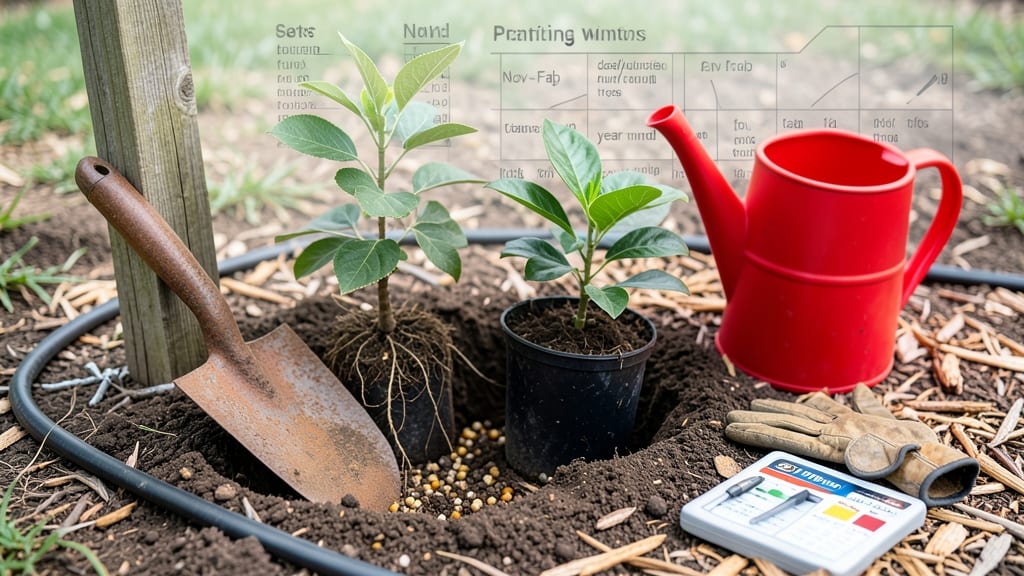
Planting fruit trees in California at the wrong time could mean watching your 🍎 saplings wither before they even take root—especially when frost dates and chill hours vary wildly from coastal Santa Barbara to the Central Valley.
The key to success isn’t just picking the right variety, but understanding when your local microclimate is ready for new growth.
Most California gardeners know spring is the prime window, but did you know late winter (February-March) is actually ideal for bare-root trees in USDA zones 7-11? That’s when trees emerge from dormancy just as the soil warms enough to support roots.
Meanwhile, container-grown varieties give you more flexibility—plant them anytime the ground isn’t frozen or baked by summer heat.
What you’ll discover here are the exact frost-free deadlines for your region, plus how chill hours determine which fruit trees will thrive where.
Whether you’re in frost-prone Sacramento or the nearly frost-free San Diego coast, we’ll break down the science so you can plant with confidence—and start harvesting in as little as 2 years.
Ready to turn your backyard into an orchard? Let’s dive into the planting calendar that matches your climate, from soil prep to post-planting care that keeps your trees growing strong through California’s unpredictable seasons.
California chill hour zones: matching fruit trees to your region’s winter needs
California’s diverse climate creates unique challenges for fruit tree growers. Unlike most states, California’s chill hour requirements vary dramatically—from 0-100 hours in coastal areas to 800-1,000+ hours in the Sierra foothills.
These chill hours (temperatures between 32°F and 45°F) trigger flowering and fruiting. Planting the wrong tree in the wrong zone means poor yields—or no fruit at all!
Understanding your local chill zone is key. For example, avocados thrive in Zone 1 (0-100 hours) along the coast, while apricots and cherries need Zone 6 (500-800 hours) in the Sierra.
Let’s break down California’s 7 chill hour zones and the best fruit trees for each, so you can plan your orchard with confidence.
⚠️ PRO TIP: Use the USDA Plant Hardiness Zone Map alongside chill hour data for the most accurate planning. Many nurseries now label trees with both USDA zones and chill hour ranges.
🌱 SUMMARY TABLE: California Chill Hour Zones & Best Fruit Trees
| Chill Hour Zone | Zone Locations | Best Fruit Trees | Notes |
|---|---|---|---|
| Zone 1 (0-100 hrs) | Coastal (San Diego, LA, Santa Barbara) | Avocado, Citrus (Orange, Lemon, Grapefruit), Olive, Pomegranate | Zero-chill varieties required; frost-sensitive |
| Zone 2 (100-300 hrs) | Central Coast (Santa Maria, Monterey), Inland SoCal | Fig, Persimmon, Low-Chill Peach, Nectarine, Plum | Watch for late spring frosts; mulch heavily |
| Zone 3 (300-500 hrs) | Bay Area, Sacramento Valley, Central Valley | Apricot, Low-Chill Apple, Pear, Quince, Kiwi | Moderate frost risk; plant on south-facing slopes |
| Zone 4 (500-700 hrs) | Fresno, Madera, Northern San Joaquin Valley | Peach, Plum, Cherry, Almond, Standard Apple | Ideal for stone fruits; irrigation critical |
| Zone 5 (700-900 hrs) | Sierra Foothills (Amador, El Dorado), Lake Tahoe | High-Chill Apple, Pear, Cherry, Plum, Walnut | Cold winters; plant in sheltered microclimates |
| Zone 6 (900-1,100 hrs) | Mount Lassen, Eastern Sierra, High Desert | High-Chill Apple, Pear, Apricot, Sweet Cherry | Short growing season; early varieties preferred |
| Zone 7+ (1,100+ hrs) | Mount Shasta, Truckee, Alpine Regions | Hardy Apple, Pear, Mountain Ash, Haskap Berry | Extreme cold; use windbreaks and mulch |
If you’re in Zone 1 or 2 (coastal areas), focus on low-chill varieties like ‘Arbequina’ olives or ‘Eureka’ lemons. These trees bloom and fruit with minimal winter chill, making them perfect for frost-free microclimates.
In contrast, Zone 5-7 growers should prioritize high-chill apples like ‘Gala’ or ‘Fuji’, which require 700+ hours of winter chill to produce reliable crops.
One common mistake is assuming all peach trees will thrive in your area. While Zone 4-5 peaches (like ‘Elberta’) need 500-700 chill hours, Zone 1-2 varieties (like ‘Redhaven’) may fail to fruit if planted inland.
Always check the chill hour range on the nursery tag—it’s the most critical piece of information for success.
For urban gardeners in Zone 3 (like the Bay Area), consider dwarf varieties of figs or
Frost-free deadlines by region: when to plant for maximum survival rates
California’s varied climate means your fruit tree planting window can shift dramatically between regions. In the Sacramento Valley, for example, frost can linger until mid-March, while coastal areas like Santa Barbara rarely see frost at all.
Timing is everything—plant too early, and a late frost could kill tender new growth; too late, and your tree won’t establish roots before summer heat sets in.
To avoid these risks, I’ve mapped out the last average frost dates and ideal planting windows for three key regions. These deadlines help you sync your planting with nature’s calendar, ensuring your stone fruits, citrus, and pome trees thrive from day one.
Let’s break it down by region so you can pick the perfect moment to plant.
⚠️ CRITICAL NOTE: Always check your local USDA zone and microclimate—mountains and valleys can shift frost dates by weeks. For example, San Diego’s coastal areas (Zone 10) have almost no frost risk, while inland Riverside (Zone 9) may see light frosts until January.
For Northern California’s Sacramento Valley, aim to plant by early April to avoid late frosts.
This region’s 3–5 frost nights per year make timing critical—bare-root trees planted in February can still be vulnerable. Peach and cherry trees need chill hours and benefit from early planting to establish roots before summer heat.
On the Central Coast, like Santa Barbara, frost is rare, but microclimates matter. Plant avocado and fig trees from February to April to align with soil warming. Container-grown trees can even go in late fall, but avoid planting during December’s occasional coastal chill.
In Southern California’s San Diego region, frost is almost nonexistent, giving you flexibility. Plant citrus and mango trees anytime, but February–March offers ideal soil moisture. Just watch for heatwaves in summer—newly planted trees need consistent watering to survive the first year.
Pro tip: Use mulch (4–6 inches) to protect roots from temperature swings. For frost-prone areas, wrap young trees with frost cloth if late frosts are forecasted. With these deadlines, your fruit trees will thrive—not just survive! 🌱