
Flowers
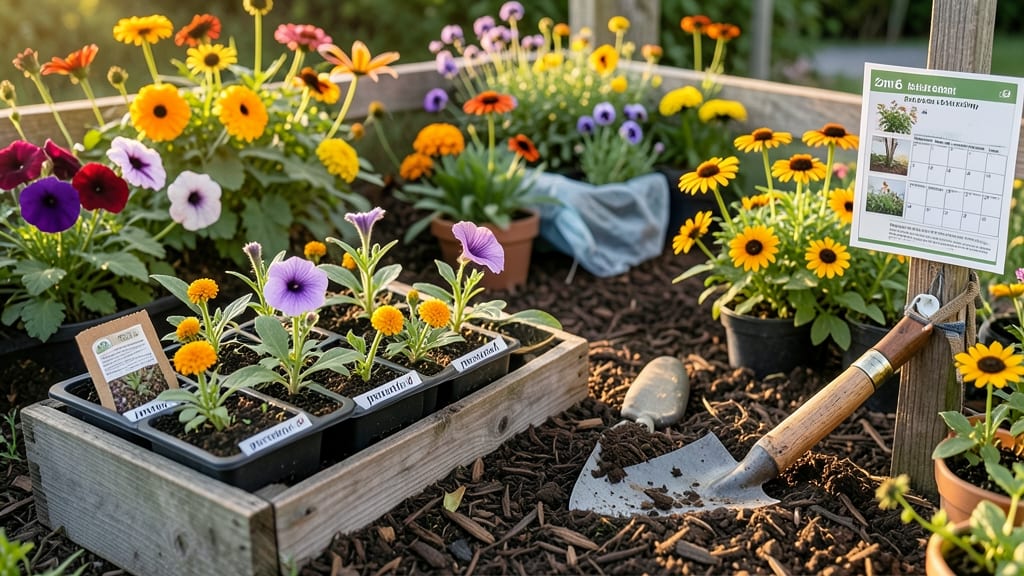
Planting your 🌸 flowers at the right time in Zone 6 means the difference between a garden that bursts with color and one that struggles to take root.
The key isn’t just waiting for spring—it’s knowing exactly when to plant for your specific types of flowers, whether they thrive in cool weather or need warmth to bloom.
In Zone 6, where last frost dates can vary from mid-April to early May, timing matters more than you might think. Cool-season blooms like pansies can handle early planting, while heat-loving marigolds need to wait until the soil warms up.
I’ll break down the perfect weeks before frost to plant each type, so you avoid common mistakes that lead to wilted dreams.
What if your frost comes early or late? No worries—I’ll share how to adjust your schedule using soil temperature tricks and microclimate hacks. Plus, you’ll discover the top 5 late-season flowers that actually thrive in Zone 6’s cooler autumn months, giving you extra blooms well into fall.
Ready to transform your garden into a year-round showstopper? Let’s dive into the exact planting calendar and tips that will have your flowers thriving from spring through frost. You’ll never second-guess your timing again!
Zone 6 last frost dates & best flower planting weeks before frost
Understanding your Zone 6 last frost dates is the first step to a thriving flower garden. In most of Zone 6, the average last frost date falls between March 15 and April 15, though this can shift by 2-3 weeks depending on your exact location.
For example, areas like Chicago (6b) typically see their last frost around April 10, while Pittsburgh (6a) might wait until April 20. These dates determine whether your cool-season flowers like pansies will bloom early or your warm-season zinnias get a head start.
Planting too early risks frost damage to tender seedlings, while waiting too long can stunt growth or delay blooms. The key is knowing how many weeks before frost to plant each type of flower.
For instance, cool-season annuals like snapdragons and sweet alyssum can handle light frosts and should go in 4-6 weeks before your last frost date. On the other hand, heat-loving marigolds need to wait until 2 weeks after the last frost to avoid shock.
Here’s a quick rule of thumb: Annuals generally need 4-8 weeks before frost to establish roots, perennials can often handle 2-4 weeks earlier, and bulbs (like tulips) should be planted 6-8 weeks before frost in fall. Let’s break down the exact timing for your Zone 6 garden.
For cool-season flowers, think of March as your prime month for planting. These hardy varieties, like pansies and sweet peas, can often survive light frosts and even bloom through early spring chills.
Start seeds indoors 6-8 weeks before your last frost date if you’re growing from seed, or plant transplants 4 weeks out for a jumpstart. My go-to cool-season flowers include snapdragons, which add vertical interest, and sweet alyssum, a low-growing ground cover that attracts pollinators.
If you’re planting warm-season flowers like marigolds or zinnias, wait until 2 weeks after your last frost date—typically mid-to-late May in Zone 6. Soil temperature is critical here; aim for at least 60°F before planting.
You can use a soil thermometer to check, or simply press your finger into the soil. If it feels warm and dry an inch down, it’s ready. For heat-loving flowers, consider using row covers or cold frames to extend the season if frost threatens unexpectedly.
Perennials are the workhorses of Zone 6 gardens because they return year after year. Plant them 2-4 weeks before your last frost date in spring or 6-8 weeks before your first frost in fall. This timing gives roots time to establish before extreme temperatures arrive.
Some of my favorite perennials for Zone 6 include coneflowers, which attract butterflies, and black-eyed Susans, a late-summer bloomer that thrives in full sun. Divide and transplant perennials in early spring or fall for best results.
Don’t overlook fall planting, especially for bulbs and hardy annuals. Planting bulbs like
How to adjust your planting timeline for early vs. late frost years
Zone 6 gardeners know frost can throw off even the best-laid planting plans. A sudden early frost in April or a delayed frost in October forces tough choices—do you rush seedlings, delay planting, or switch to cold-hardy varieties?
The key is flexibility, and I’ve tested these strategies over years of trial and error in my own Zone 6b garden.
First, always check your local frost dates—they can vary by 1-2 weeks even within the same zone. For example, my northern Zone 6 neighbors often see frost 2 weeks earlier than my southern neighbors. Use the National Weather Service or Almanac frost calculators to pinpoint your exact window.
⚠️ callout warning
For early frost years, shift your timeline by 2-4 weeks later. Start cool-season flowers like pansies or snapdragons indoors under grow lights 4-6 weeks before your target date.
Use biodegradable pots to transplant seedlings without disturbing roots. For heat-lovers, opt for fast-maturing varieties (look for "early bloom" labels) or try succession planting every 2 weeks.
Late frost years? Don’t panic—use microclimate tricks to protect tender plants. My raised beds warm up 2-3 days faster than in-ground soil, so I plant heat-lovers there first.
For extra insurance, cover seedlings with frost cloth or a mini cold frame on chilly nights. Even a black plastic mulch can raise soil temps by 5-8°F.
Create a 7-day frost risk checklist to stay ahead: ☑️ Check 5-day forecast daily after your usual planting date ☑️ Monitor soil temps (not air temps) with a thermometer ☑️ Have frost cloth and row covers ready ☑️ Delay planting warm-season flowers if nights dip below 55°F ☑️ Switch to cold-hardy backups (e.g., calendulas instead of petunias)
Remember, even perennials can suffer if planted too late. For example, daylilies need 6-8 weeks to establish roots before winter. If frost hits early, delay planting until late May and prioritize root growth over blooms that first year.
With these adjustments, you’ll turn frost surprises into blooming opportunities instead of setbacks. 🌱