
Plants
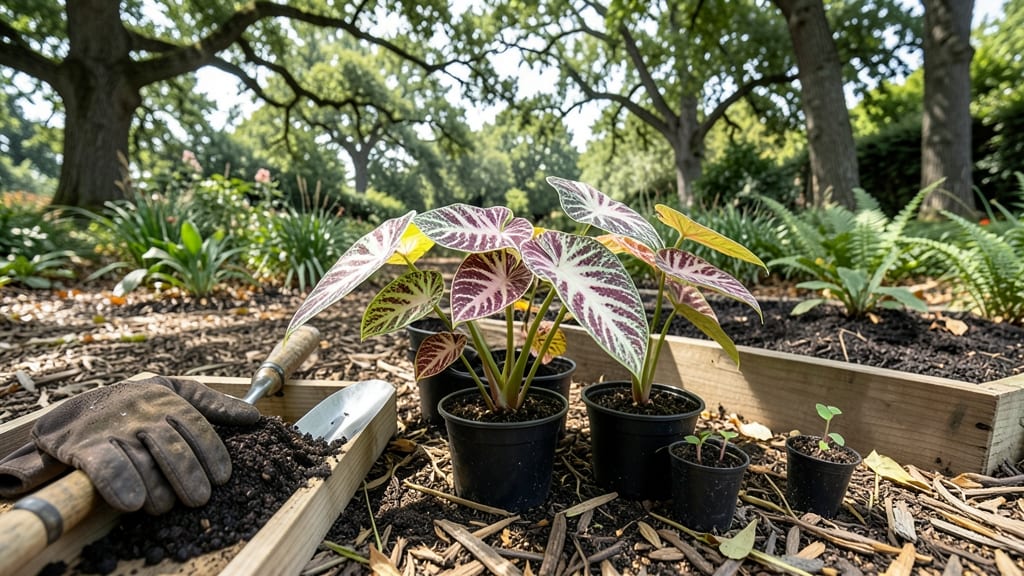
Planting caladiums in Texas at the wrong time can turn your 🌿 dream garden into a sad, wilted disappointment—especially when summer heat arrives faster than you expect.
The key to vibrant foliage lies in waiting until soil temperatures hit 65°F and all frost danger has passed, typically between mid-April and May depending on your zone.
Most Texas gardeners rush to plant too early, only to watch their tubers rot in damp, cool soil. Others wait too long, missing the spring planting window when caladiums thrive. I’ve learned the hard way that timing isn’t just about the calendar—it’s about the microclimate of your yard.
In this guide, I’ll break down the exact planting window for your Texas zone, plus three common mistakes that kill growth before it starts.
Whether you’re in North Texas (where frost lingers longer) or the Gulf Coast (where heat arrives early), you’ll know exactly when to get those tubers in the ground for maximum impact.
Ready to avoid the costly mistakes that turn caladiums into a gamble? Let’s get started with the right timing—and keep your garden looking lush all season long.
Best planting times for caladiums in Texas: month-by-month guide
Caladiums thrive in Texas’s warm climate but need precise timing to avoid heat stress or late-season failures. These tropical tubers demand soil temperatures above 65°F and frost-free conditions, making April and May the sweet spot for most regions.
However, Texas’s diverse climate zones—from North Texas’s cooler springs to South Texas’s early heat waves—require tailored approaches to avoid common pitfalls like rot from early planting or wilting from delayed starts.
To succeed, align your planting with your USDA zone (8a-11) and local frost dates. North Texas gardeners (Zones 8a-8b) should wait until mid-April, while South Texas (Zones 9a-11) can plant as early as late March.
The key is soil temperature, not just air temperature—caladiums rot if planted in cold soil, even if daytime temps feel warm.
Here’s your month-by-month breakdown, including soil temperature thresholds and frost-free date calculations for Texas’s three main regions: North, Central, and South.
| Region | Last Frost Date | Ideal Planting Window | Soil Temp Threshold | Key Consideration |
|---|---|---|---|---|
| North Texas (Zones 8a-8b) | February 15 – March 1 | April 15 – May 15 | 65°F+ (consistently) | Wait for stable 70°F+ nights to avoid early heat stress. |
| Central Texas (Zones 8b-9a) | March 1 – March 15 | March 30 – April 30 | 60°F+ (minimum) | Test soil with a thermometer—caladiums rot below 60°F. |
| South Texas (Zones 9a-11) | January 1 – February 1 | Late March – Early April | 65°F+ (required) | Plant early but mulch heavily to retain moisture in summer heat. |
| 💡 Pro Tip: Use a soil thermometer—caladiums need 65°F+ soil for 7+ days before planting. | ||||
For spring planting, aim to get caladiums in the ground 4-6 weeks before peak summer heat (typically late May in North Texas, June in South Texas). This gives roots time to establish before 90°F+ temperatures arrive.
In North Texas, where springs can be unpredictable, delay until after May 1 to avoid late frosts—caladiums cannot tolerate frost.
Did you know you can also plant caladiums in summer (June-July) for a fall display? This works best in South and Central Texas, where summer heat is less extreme. Plant tubers 2-3 inches deep in well-draining, shaded soil, then water deeply every 5-7 days to prevent wilting.
Mulch with 2-3 inches of organic matter (like shredded bark) to retain moisture and protect roots from heat stress.
One critical mistake Texas gardeners make is planting caladiums too shallow (less than 2 inches deep). This exposes tubers to heat and drought, causing them to dry out. Always bury them 3 inches deep in rich, moist soil amended with compost or peat moss.
In containers, use a well-draining potting mix with 30% perlite to prevent rot.
If you’re in North Texas and miss the spring window, don’t despair—caladiums can be overwintered indoors and replanted in late spring.
Dig up tubers when foliage yellows (typically October-November), dry them in a cool, dark place for 2 weeks, then store in paper bags with peat moss at 60-65°F until replanting.
For container gardening, plant caladiums in May-June to avoid early heat stress. Choose large pots (12+ inches wide) with drainage holes and use a lightweight, airy mix (e.g., 50% potting soil, 30% perlite, 20% compost).
Water daily in summer and move containers to shaded patios during peak afternoon sun to prevent leaf scorch.
Remember: caladiums are not drought-tolerant. In Texas’s summer heat
3 Deadly mistakes Texas gardeners make with caladium planting (and how to fix them)
Caladiums thrive in Texas’s heat—but only if planted correctly. Many gardeners accidentally smother these tropical beauties by making 3 common mistakes that stunt growth or kill them entirely. The good news?
Each error has a simple fix, and I’ve seen revived caladiums after just one season of proper care. Let’s dive into the most critical pitfalls and how to avoid them.
First, planting too deep is a silent killer. Unlike shallow-rooted succulents, caladium tubers need to sit just 1-2 inches below soil. I’ve watched gardeners bury them 4 inches deep, thinking they’d get extra support—only for the tubers to rot from poor airflow.
The fix? Dig a shallow hole, place the tuber with the bud side up, and cover lightly with soil.
Second, ignoring soil moisture turns Texas’s dry spells into a death sentence. Caladiums love humidity but hate soggy roots. I’ve seen wilting leaves within days when gardeners watered sporadically. The solution? Mulch heavily with 2-3 inches of organic matter (like shredded bark) to retain moisture while preventing fungal growth.
Water deeply once a week during dry spells, but never let them sit in standing water.
Third, choosing the wrong location guarantees failure. Direct sun scorches their leaves, while deep shade stunts their growth. The ideal spot? Partial shade—think dappled sunlight under trees or a north-facing patio.
I once placed caladiums in full sun, and they turned crispy within a week. Move them to a spot with morning sun and afternoon shade for perfect foliage.
Mistake vs. Fix: Caladium Planting Errors in Texas
| Mistake | Why It Fails | Fix It Like This |
|---|---|---|
| Planting too deep | Rot from poor airflow | Dig 1-2" hole, bud side up |
| Ignoring soil moisture | Wilting or fungal rot | Mulch + deep water weekly |
| Wrong location | Leaf scorch or weak growth | Partial shade, morning sun |
Pro Tip: Test soil moisture by sticking your finger 1" deep—if it's dry, water!
Fixing these mistakes transforms caladiums from struggling survivors to showstopping stars in your garden. Start by auditing your current planting spots: Are your tubers buried too deep? Is the soil bone-dry?
Move them to partial shade and mulch immediately. Within weeks, you’ll see lush, vibrant leaves—proof that even Texas’s harsh conditions can’t stop these tropical gems.
For extra insurance, fertilize lightly with a balanced 10-10-10 mix every 6 weeks during growing season. I’ve seen caladiums double in size when given the right nutrients and care.
The key? Consistency. Avoid overwatering, shield from harsh sun, and keep them cozy with mulch. Your caladiums will reward you with stunning foliage all summer long.