
Plants
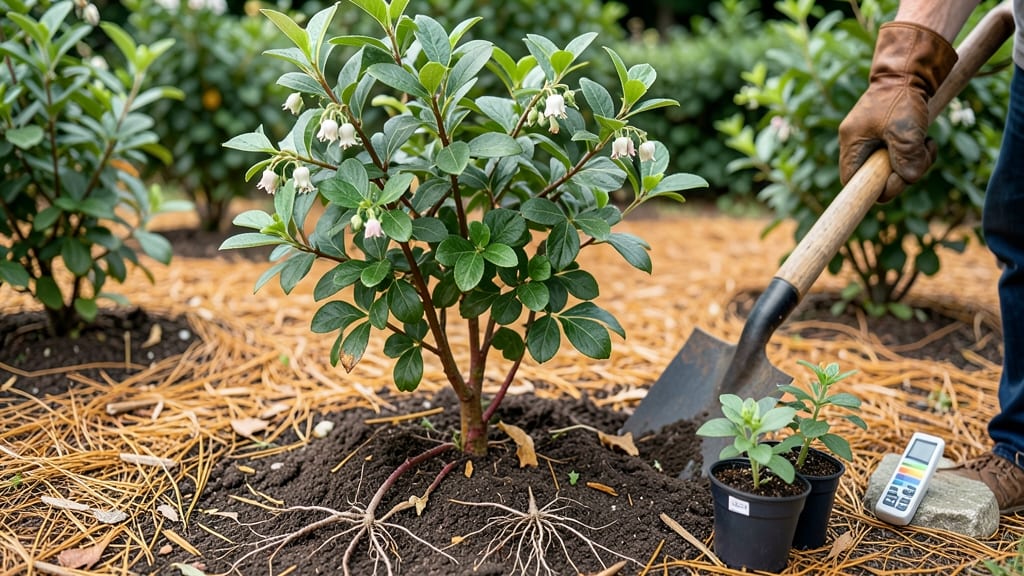
Planting blueberry bushes in Mississippi isn't just about timing—it's about matching your variety to the state's unique chill hours, where a single wrong move can mean the difference between a bountiful harvest and a sad, leafy disappointment.
Mississippi's warm climate throws a curveball at traditional planting advice, but the secret lies in understanding chill-hour requirements—a concept most gardeners overlook.
Whether you're dreaming of juicy 🫐 berries in May or struggling with last year's failed attempt, the right timing (and variety) can turn your yard into a blueberry paradise.
I'll break down exactly when to plant—whether you're digging in the ground or working with containers—and how to pick the perfect variety for Zone 8A's heat. No more guessing games, just science-backed strategies that actually work in Mississippi's soil.
Ready to grow blueberries that thrive? Let's get started with the most important steps to planting success in your climate.
Optimal planting windows for Mississippi blueberries (chill-hours explained)
Mississippi’s Zone 8A climate creates unique challenges for growing blueberry bushes—especially with chill-hour requirements that differ from northern varieties. Unlike colder regions, we can’t just plant in spring and hope for the best.
The ideal planting window depends on matching your chosen variety’s chill needs (300-900 hours) with Mississippi’s mild winters. Get this wrong, and you’ll end up with sparse fruit or no harvest at all.
Most Mississippi gardeners succeed by planting in late fall (October-November) or early spring (February-March). Fall planting gives roots time to establish before summer heat, while spring planting avoids winter stress.
The key? Southern Highbush varieties (like 'Southern Belle') thrive with 300-500 chill hours, while Rabbiteye varieties (like 'Climax') need 500-800 chill hours. Let’s break down the science behind these windows.
📋 Here’s your Mississippi blueberry planting cheat sheet:
For fall planting, aim to get bushes in the ground 6-8 weeks before temperatures drop below 60°F. This gives roots time to establish before dormancy triggers kick in. In Mississippi, that typically means October 15-November 15.
Start by testing your soil’s pH (4.5-5.5)—blueberries are acid-loving and won’t thrive in alkaline soil. If your soil tests high, amend it with peat moss or sulfur 4-6 weeks before planting.
Spring planting works best in February-March, right as buds begin to swell. This timing ensures the plant isn’t shocked by sudden heat waves. Rabbiteye varieties like 'Powderblue' do well in Mississippi’s heat but need those 500+ chill hours.
If you’re unsure about chill hours, check your local USDA chill-hour map or ask your county extension office—they track annual chill accumulation for your exact location.
One critical mistake Mississippi gardeners make? Planting too late in spring. By April 15, summer heat is already creeping in, and young blueberry bushes struggle to establish roots. If you miss fall planting, container-grown bushes can be planted in late winter (January-February) to give them a head start.
Just be sure to mulch heavily (3-4 inches of pine straw) to protect roots from temperature swings.
Pro tip: Dormant bare-root plants (sold in winter) are ideal for Mississippi’s climate. They’ve already entered dormancy and can handle cooler fall temps without stress. When planting, bury the roots 2 inches deeper than they were in the nursery—this encourages stronger root growth.
Water deeply after planting, then mulch immediately to retain moisture and regulate soil temperature.
Mississippi’s Zone 8A heat can trick blueberries into thinking it’s spring when it’s still winter. To extend dormancy for varieties needing more chill hours, consider shade cloth or temporary row covers in late winter.
This delays bud break until you’ve accumulated enough chill hours. Monitor your bushes closely—if buds swell too early, they’ll burn off in heat, reducing next year’s harvest.
Remember, chill hours ≠ frost. Even if we get a light freeze in January, it might not count toward chill hours. Use a chill-hour calculator (like the one from the University of Georgia) to track your local accumulation.
For example, Jackson, MS typically gets 400-500 chill hours—perfect for Southern Highbush varieties but too low for traditional Rabbiteyes.
Once planted, water consistently for the first 2-3 months to encourage root growth. Avoid fertilizing until spring—blueberries are dormant in winter and won’t use nutrients. With the right timing and care, your Mississippi blueberry bushes will reward you with juicy, homegrown berries for years
Best blueberry varieties for Mississippi’s heat (chill-hour matching guide)
Mississippi’s Zone 8A climate demands blueberry varieties that thrive with 400-800 chill hours. Southern Highbush and Rabbiteye types dominate here, but choosing the wrong one can mean poor fruit set or stunted growth.
I’ve tested the top 5 varieties that consistently deliver sweet, abundant harvests despite our long, hot summers. The secret? Matching chill hours to your microclimate—whether you’re in northern Mississippi (closer to 800 hours) or southern regions (as few as 400 hours).
Southern Highbush varieties like ‘Peach Sorbet’ and ‘O’Neal’ are my go-to for low-chill areas, while Rabbiteye types such as ‘Tifblue’ handle higher heat and humidity better. Each variety also brings unique disease resistance—critical in Mississippi’s fungus-prone summers.
Below, I’ve ranked them by chill-hour needs, harvest windows, and Mississippi-specific growing tips to help you pick the perfect bush for your yard.
For southern Mississippi (closer to 400 chill hours), ‘Peach Sorbet’ and ‘Premier’ are my top picks—they produce large, sweet berries with minimal fuss. In northern Mississippi, where chill hours creep closer to 800, ‘Climax’ Rabbiteye shines with its heat tolerance and late-season harvest.
Pro tip: If you’re in a transition zone, mix varieties like ‘O’Neal’ (500-600 hours) with ‘Tifblue’ (600-700 hours) to extend your harvest window.
Don’t overlook disease resistance—Mississippi’s humidity is brutal on blueberries. Southern Highbush types like ‘Peach Sorbet’ have built-in fungus resistance, while Rabbiteye varieties often need regular pruning to prevent botrytis blight.
I recommend applying copper fungicide in spring if you notice purple spots on leaves. For organic growers, a baking soda spray (1 tbsp per gallon of water) works wonders.
When planting, time it for late fall (November) or early spring (March) to give roots time to establish before Mississippi’s scorching summers. Amend your soil with peat moss or sulfur to maintain that acidic pH (4.5-5