
Plants
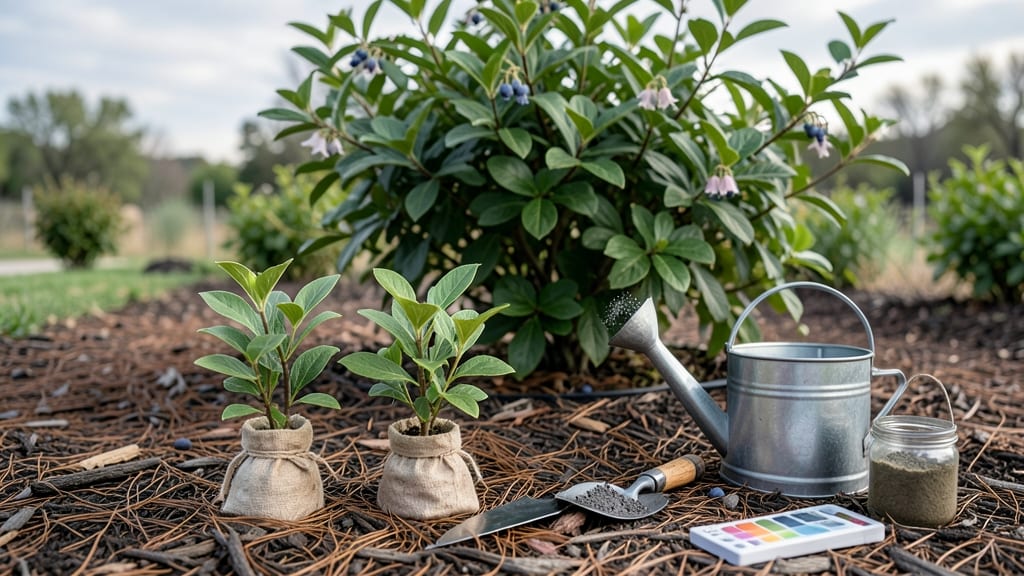
Timing your 🫐 blueberry planting in Utah isn't just about the calendar—it's about matching your bushes to the chill hours your region delivers. Plant too early, and frost can still threaten tender roots; too late, and your bushes won't establish before winter sets in.
Most Utah gardeners swear by spring planting after the last frost (typically mid-April), but fall planting in September can work too—if you pick the right varieties for your microclimate.
Whether you're in Salt Lake City's urban heat island or a cooler high-desert area, getting this right means the difference between a thriving bush and a sad, struggling one.
I'll walk you through exactly when to plant, which varieties thrive in Utah's USDA Zones 5-7, and how to prep your soil for these acid-loving shrubs. No more guessing—just proven strategies for Utah's unique growing conditions.
Ready to grow blueberries that produce year after year? Let's get your planting schedule locked in for maximum success.
Utah’s chill-hour zones: matching blueberry varieties to your location
Utah’s diverse climate—from the Wasatch Front’s urban heat islands to high-desert rural areas—creates microclimates that drastically affect blueberry success. Salt Lake City’s 600–800 chill hours contrasts sharply with Ogden’s 800–1,000 hours, while rural areas like Price or Moab often see 300–500 hours.
These differences mean your blueberry variety choice could fail or thrive based on chill-hour needs.
Blueberries require chill hours (temperatures between 32–45°F) to set fruit. Utah’s USDA Zones 5–7 complicate things further—low-chill varieties (like ‘Top Hat’ or ‘Peach Sorbet’) struggle in Zone 5’s colder winters, while high-chill types (like ‘Bluecrop’) may overwinter poorly in Zone 7’s milder winters.
Here’s how to match your location to the right blueberry varieties, ensuring optimal fruit production and winter survival:
| Utah Region | Chill Hours | USDA Zone | Best Varieties | Notes |
|---|---|---|---|---|
| Salt Lake City | 600–800 hrs | Zone 6 | ‘Bluecrop’, ‘Duke’, ‘Jersey’ | Mid-chill needs; needs winter mulch |
| Ogden/Weber | 800–1,000 hrs | Zone 6–7 | ‘Bluegold’, ‘Patriot’, ‘Chester’ | High-chill; thrives in cooler winters |
| Rural (Price/Moab) | 300–500 hrs | Zone 5–6 | ‘Top Hat’, ‘Peach Sorbet’, ‘O’Neal’ | Low-chill; needs heat protection |
| St. George | 100–300 hrs | Zone 7b–8 | ‘Southern Highbush’, ‘Misty’ | Heat-tolerant; needs irrigation |
For Salt Lake City gardeners, ‘Bluecrop’ is a top pick—it handles 600–800 chill hours and produces large, sweet berries. However, its winter hardiness drops in Zone 5’s colder pockets, so add 3–4 inches of mulch after the first frost.
In Ogden’s cooler microclimate, ‘Patriot’ shines with its disease resistance and high yield, but it may overproduce leaves if pruned incorrectly.
If you’re in
Best planting windows in Utah: spring vs. fall timing for maximum survival
Utah’s alkaline soil (pH 7.5–8.5) and variable frost dates make timing critical for blueberry success. Spring planting (March–April) gives bushes a full growing season, while fall planting (September–October) allows roots to establish before winter. Both windows work, but each has trade-offs for Utah’s climate.
For spring planting, aim for after the last frost date (typically mid-April in Salt Lake City). Soil temperatures should stay above 45°F (7°C) for at least 2 weeks to prevent root shock.
Fall planting, however, offers a longer window (late September–early October) to adjust soil pH and amend with organic matter before winter dormancy.
Spring Planting (March–April)
- Full growing season ahead
- Easier to monitor soil moisture
- Less frost risk for young roots
- Limited time to amend soil
- Hot summers can stress new plants
- Requires consistent watering
Fall Planting (September–October)
- More time to prepare soil
- Cooler temps reduce transplant shock
- Established roots handle winter better
- Early frost can damage new plants
- Limited growing season for root establishment
- Harder to monitor soil moisture
Utah’s alkaline soil requires amending with sulfur (1–2 pounds per plant) to lower pH to 4.5–5.5. For spring planting, mix amendments into the planting hole at least 2 weeks before transplanting.
Fall planting gives you more time to work amendments deeper (6–8 inches) and improve drainage with compost or peat moss.
In high-altitude areas (e.g., Logan, Park City), delay spring planting until May 1–15 to avoid late frosts. Fall planting in these zones should finish by September 15 to allow roots to harden off. Always check your local USDA hardiness zone (5–7 in Utah) and adjust timing accordingly.
Whether planting in spring or fall, mulch heavily (3–4 inches of straw or wood chips) to retain moisture and regulate soil temperature. In Utah’s dry climate, mulch also helps suppress weeds and prevents soil erosion during our windy seasons.
For bare-root plants, soak roots for 2–4 hours before planting to reduce transplant shock. Container-grown plants can be planted year-round but thrive best in spring or early fall. Always water deeply after planting to encourage root growth.
🫐