
Planting
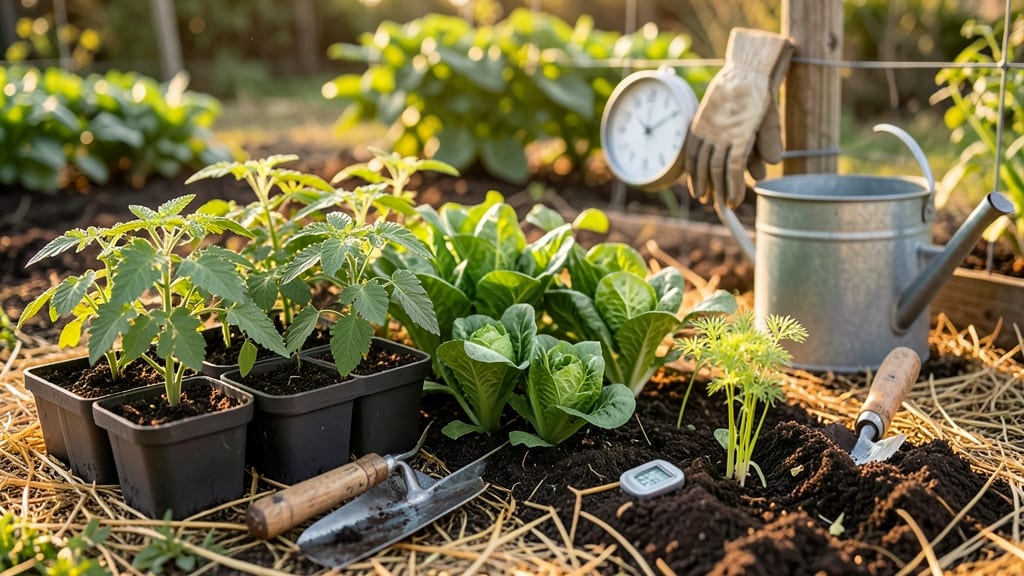
Timing your 🥕 vegetable garden in Virginia isn’t just about luck—it’s about knowing when to plant for the best harvest. With frost dates shifting from Zone 6a’s late March to Zone 8a’s mid-February, missing the window can mean stunted plants or wasted effort.
I’ve learned the hard way that cool-season crops like lettuce and peas thrive when planted 4-6 weeks before the last frost, while tomatoes and peppers need to wait until after mid-April in most regions.
But Virginia’s climate varies wildly—coastal areas stay milder longer, while mountain zones face earlier freezes.
This guide will break down exactly when to plant in your specific county, so you can avoid common mistakes and maximize your garden’s potential. Whether you’re a beginner or a seasoned gardener, these county-specific tips will help you grow a thriving 🥕 vegetable garden all season long.
Ready to turn your backyard into a productive harvest zone? Let’s dive into the perfect planting schedule for your Virginia climate—no guesswork required.
Virginia’s last frost dates by region: when to plant cool-season vs. warm-season vegetables
Virginia’s five distinct climate zones create wildly different planting windows—from the mild Coastal Plain to the cooler Appalachian Plateau.
Knowing your last frost date is critical: plant cool-season crops like lettuce and peas too late, and they’ll bolt in the heat; wait too long for warm-season crops like tomatoes, and frost will nip tender seedlings.
Let’s break down the county-by-region averages so you can time your garden like a pro.
First, identify your zone using Virginia’s USDA Hardiness Map. The Coastal Plain (e.g., Norfolk, Virginia Beach) enjoys earlier last frosts (mid-March), while the Blue Ridge Mountains (e.g., Roanoke, Blacksburg) can linger until mid-April.
The Valley & Ridge (e.g., Staunton, Harrisonburg) and Piedmont (e.g., Richmond, Charlottesville) fall in between, with last frosts typically between March 20 and April 5. The Appalachian Plateau (e.g., Bristol, Abingdon) often waits until April 10–20.
Here’s the game-changer: cool-season crops (spinach, kale, broccoli, peas) should go in 4–6 weeks before your last frost, while warm-season crops (tomatoes, peppers, beans, cucumbers) need to wait 2–3 weeks after.
For example, in Zone 7a (Piedmont), that means lettuce in late February and tomatoes in early April. But if you’re in Zone 6a (Blue Ridge), hold off on tomatoes until mid-April.
🌱 Pro Tip: Use the Virginia Cooperative Extension’s Frost Date Calculator for hyper-local precision. Even within a region, microclimates—like a south-facing slope or urban heat island—can shift frost dates by 1–2 weeks.