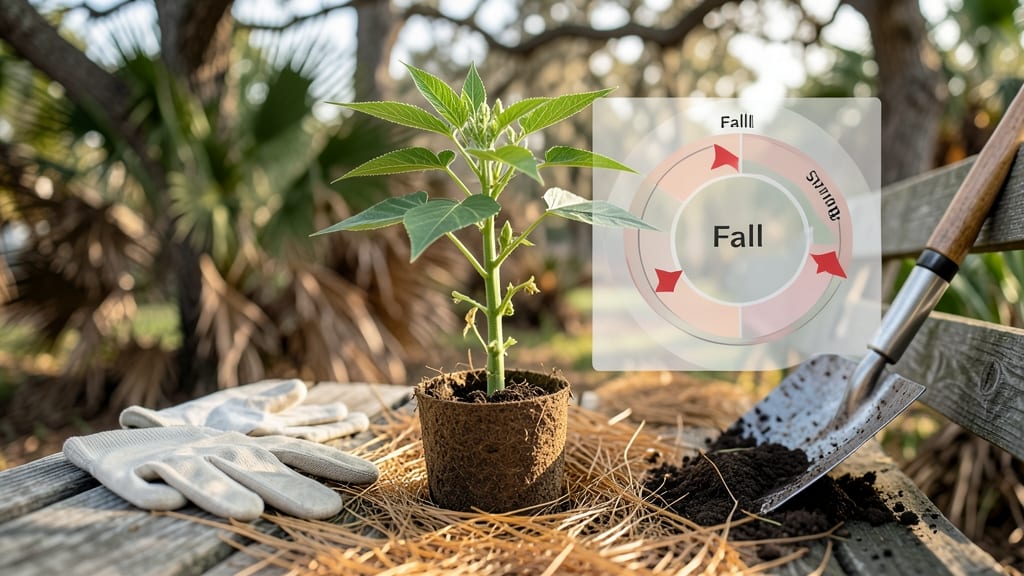
Planting in Florida might seem simple with its warm climate, but timing is everything to avoid stunted growth or wasted effort. The best time to plant here depends on your heat zone—whether you're in frost-prone North Florida or the consistently warm South.
Get this wrong, and even your hardiest plants could struggle.
I’ve spent years growing everything from tomatoes to native 🌱 species in Florida’s diverse zones, and the difference between a thriving garden and a disappointing one often comes down to when you put seeds in the ground.
Too early, and cool-season crops bolt before harvest; too late, and warm-season plants wilt under summer heat.
This guide breaks down the exact months to plant in Florida’s 11 heat zones, including frost-free dates and microclimate tips. Whether you’re sowing lettuce in spring or tomatoes in summer, you’ll learn how to align your planting schedule with Florida’s unique climate—no guesswork required.
Ready to maximize your garden’s potential? Let’s dive into the science-backed planting calendar that’ll help you grow more, with less frustration.
🌱
When to Plant Florida
Jan
❄️
Feb
❄️
Mar
🌱
Apr
🌱
May
🌱
Jun
🌱
Jul
☀️
Aug
☀️
Sep
🍂
Oct
🍂
Nov
🍂
Dec
❄️
Florida planting calendar by heat Zone: exact months for zero-frost success
Florida’s 11 heat zones create dramatic differences in planting success—from frost-prone North Florida to tropical South Florida. The key? Aligning your planting with temperature thresholds and frost-free dates. In Zone 8A (North Florida), you’ll need to time cool-season crops perfectly, while Zone 11 (Miami) offers year-round planting opportunities.
Let’s break down the exact months for vegetables, flowers, and tropical plants to maximize your garden’s potential.
Understanding Florida’s two-crop system is critical. Most gardeners grow cool-season crops (like broccoli and lettuce) in fall/winter, then switch to warm-season staples (tomatoes, peppers) in spring/summer.
However, your heat zone dictates timing—planting tomatoes in Zone 8A too early risks frost damage, while Zone 10+ gardeners can grow year-round with minimal adjustments.
Frost dates are your first guidepost. North Florida (Zones 8-9) averages 20-30 frost-free days in winter, while South Florida (Zones 10-11) rarely sees frost. Use these average last frost dates as your baseline:
- Zone 8A (Jacksonville): March 15 (last frost), November 1 (first frost)
- Zone 9A (Orlando): February 15 (last frost), December 15 (first frost)
- Zone 10A (Tampa): January 1 (last frost, rare), no frost
- Zone 11 (Miami): No frost year-round
Here’s your heat zone planting calendar, tailored for vegetables, flowers, and tropical plants:
| Heat Zone |
Cool-Season Plants (Broccoli, Lettuce) |
Warm-Season Plants (Tomatoes, Peppers) |
Tropical Plants (Citrus, Avocado) |
Key Notes |
| Zone 8A (Jacksonville) |
August–September (transplant), October–November (direct sow) |
April 15–May 15 (after frost risk) |
Year-round (slow growth in winter) |
Use row covers for cool-season crops; wait for soil to warm to 65°F+ for warm-season plants. |
| Zone 9A (Orlando) |
September–October (transplant), October–November (direct sow) |
March 1–April 15 |
Year-round (plant in spring for fastest growth) |
Avoid planting warm-season crops before 50°F soil temps; mulch to retain heat. |
| Zone 10A (Tampa) |
September–October (transplant), October–December (direct sow) |
February 1–March 31 |
Year-round (best growth in spring/fall) |
Lettuce bolts in summer heat; use shade cloth for cool-season crops. |
| Zone 11 (Miami) |
Year-round (avoid peak summer) |
Year-round (slow growth in winter) |
Year-round (plant spring for
Top 5 mistakes Florida gardeners make with planting timing (and how to fix them)
Even in Florida’s tropical climate, planting at the wrong time can turn your garden into a wilted disappointment. Many gardeners assume "warm weather" means instant success, but microclimates and heat zones create big differences—especially between North Florida’s cooler winters and South Florida’s frost-free paradise.
I’ve seen tomatoes bolt in Jacksonville when planted too early and broccoli melt in Miami during summer heat. The key? Understanding Florida’s two-crop seasons and adjusting for humidity, soil warmth, and local frost risks—even in the "frost-free" zones.
⚠️ Warning: Planting Too Early in North Florida
North Florida’s Heat Zones 8-9 (like Gainesville and Tallahassee) can see light frosts as late as February. Planting warm-season crops (tomatoes, peppers, cucumbers) before April 15 risks stunted growth or death. Cool-season crops (lettuce, spinach, carrots) planted after March 1 often bolt from heat stress.
Mistake #1: Ignoring soil temperature. Many gardeners plant warm-season veggies in March when soil is still too cool (<60°F). Use a soil thermometer—wait until soil hits 70°F+ for tomatoes and 65°F+ for peppers. For cool-season crops, soil should be 50-65°F.
Mistake #2: Overestimating frost-free zones. Even in South Florida (Zones 10-11), microclimates matter. Coastal areas like Fort Lauderdale stay warmer than inland Orlando.
A row cover can extend your cool-season growing window by 4-6 weeks in Zone 9, while Zone 10 gardeners might need shade cloth in peak summer to protect leafy greens.
Fix: Use Florida’s two-crop system. Plant cool-season crops in fall (Sept-Oct) and spring (Jan-Feb), then switch to warm-season crops in April-May and July-August. For example, broccoli thrives in cool weather but bolts by March—so succession plant every 2 weeks for continuous harvests.
Mistake #3: Planting tropical plants too late. Avocados, citrus, and banana trees need warm soil to establish roots. Planting them in September risks hurricane season stress or fungal diseases from high humidity. Instead, plant bare-root citrus in January-February when rains ease and soil warms.
Pro tip: Mulch heavily (3-4 inches of pine straw or wood chips) to regulate soil temp and retain moisture. This helps young transplants survive Florida’s sweltering afternoons and humid nights. 🌱
★★★★★4.7(2 reviews)
|