
Plants
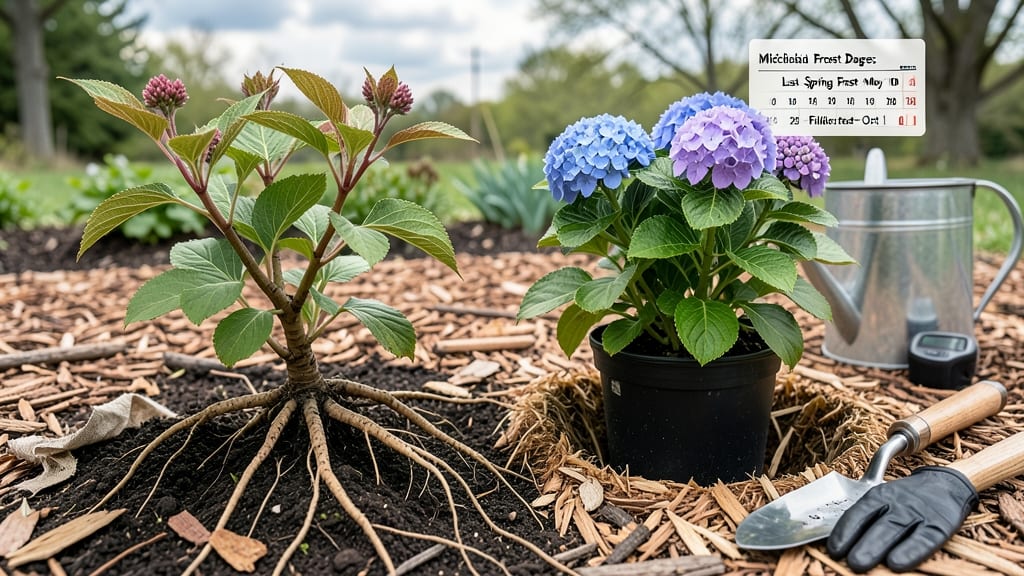
Planting hydrangeas in Michigan isn't just about grabbing a shovel and digging—it's about timing your move to match the soil temperature and last frost dates that make all the difference between thriving blooms and struggling shrubs.
If you've ever watched your hydrangeas 🌸 fight back from frost damage or fail to bloom, you know how critical the right planting window is. Michigan's 5b-6b climate gives us two prime chances: early spring when the ground warms or fall before winter sets in.
I'll break down exactly when to plant—whether you're working with bare-root or container-grown plants—and how to prepare your soil for Michigan's unpredictable weather swings. Let's get those roots established just right.
With the right timing, you'll have hydrangeas that burst with color year after year, proving that patience in planting pays off in spectacular blooms. Ready to master the Michigan method?
Michigan hydrangea planting timeline: soil temp & last frost guidelines
Timing your hydrangea planting in Michigan means balancing soil temperature and last frost dates—two factors that can make or break your shrub's success. The ideal soil temperature for planting is between 55-65°F, which triggers root growth without shocking tender roots.
In Michigan's USDA zones 5b-6b, this window opens differently depending on whether you're in the Lower Peninsula or Upper Peninsula.
Spring planting is the most popular choice because it gives roots time to establish before summer heat arrives. However, fall planting can also work if you plant 6-8 weeks before the first frost.
The key is avoiding both early spring frosts and late fall freezes, which can damage newly planted hydrangeas.
Michigan's last frost dates vary dramatically by region. In the Lower Peninsula, the average last frost date is around April 15, while the Upper Peninsula typically sees its last frost around May 1.
These dates shift yearly, so always check your local Michigan State University Extension frost maps before planting.
For container-grown hydrangeas, you can plant as early as late March in the Lower Peninsula if you're prepared to protect them with frost cloth during unexpected cold snaps.
Bare-root hydrangeas, however, need to wait until the soil is consistently above 55°F, which usually aligns with mid-April to early May.
Fall planting offers its own advantages in Michigan. By planting in September or early October, you allow roots to establish before winter dormancy sets in. This method reduces transplant shock and gives hydrangeas a head start in spring.
Just be sure to water thoroughly after planting and apply a 2-3 inch layer of mulch to insulate roots during winter.
If you're planting in containers, the timeline shifts slightly. Container-grown hydrangeas can handle cooler soil temperatures, so you can plant them as early as late March in the Lower Peninsula.
However, they still need protection from late frosts. Use frost blankets or move containers to a sheltered spot if nighttime temperatures dip below 32°F.
For bare-root hydrangeas, timing is even more critical. These plants need to establish roots quickly, so planting them too early can lead to root rot in cold, wet soil.
Wait until the ground is workable and the soil temperature consistently stays above 55°F. In most of Michigan, this means waiting until mid-April or later.
One common mistake I see is planting hydrangeas too late in spring. If you miss the April-May window, your plants may struggle to establish before summer heat arrives.
Similarly, planting too late in fall—after mid-October—can leave roots vulnerable to winter cold. Always aim to plant at least 6 weeks before the first frost.
To check soil temperature, use a soil thermometer or dig down about 6 inches—the depth where hydrangea roots will establish. If the soil feels cool to the touch, wait a few more days.
Remember, hydrangeas are perennials, so getting the timing right now means years of beautiful blooms with minimal effort.
Pro tip: Mark your calendar with your local last frost date and plan to plant hydrangeas 2-3 weeks after that date. This buffer gives you time to adjust for unexpected late frosts while ensuring your plants have enough time to root before summer's heat sets in.
With this approach, your hydrangeas will reward you with vibrant blooms year after year. 🌸
How to prepare Michigan soil for hydrangeas: pH, drainage & mulching tips
Michigan's clay-heavy soil and acid-loving hydrangeas need special attention to create the perfect growing conditions. Most Michigan soils naturally lean alkaline, but hydrangeas—especially blue and pink varieties—thrive in acidic soil (pH 5.2-6.0). Without proper prep, you'll end up with lackluster blooms or stressed plants struggling to establish roots.
Start by testing your soil's pH level using a simple home test kit. If your results show a pH above 6.0, you'll need to amend the soil with sulfur or peat moss to lower it gradually.
I've found that adding 1-2 pounds of elemental sulfur per 100 square feet works well for Michigan's alkaline soils, but always test again after 2-3 months to monitor progress.
Michigan's clay soil can become compacted and waterlogged, especially after heavy rains. To improve drainage, mix in compost and coarse sand (like builder's sand) to create a well-aerated root zone.
For existing clay soil, consider planting hydrangeas in raised beds or mounded soil to prevent root rot during Michigan's wet springs.
⚠️ callout warning ⚠️
⚠️ Timing is Critical for Michigan Planting
Best time to plant: After last frost (mid-April to May) or 4-6 weeks before first frost (September). Never plant when soil temps are below 55°F—roots won't establish properly. Michigan's Upper Peninsula has a shorter growing season (plant by early September), while Southern Michigan can extend to late October.
Pro Tip: If planting in fall, choose container-grown hydrangeas—they establish roots faster than bare-root plants in Michigan's short autumn window.
Once your soil is properly amended, focus on mulching to protect hydrangeas from Michigan's freeze-thaw cycles and extreme temperature swings. Apply 3-4 inches of organic mulch (like shredded bark or wood chips) around the base of your plants, keeping it 3 inches away from the stem to prevent rot.
In Michigan's harsh winters, I've seen mulch reduce soil temperature fluctuations by up to 10°F, which is crucial for young plants.
For container-grown hydrangeas, use a well-draining potting mix with perlite or vermiculite to prevent compaction. Since containers dry out faster than in-ground plantings, add water-retaining crystals to the soil mix.
When planting in containers, ensure the pot has drainage holes—Michigan's heavy rains can quickly drown potted plants if water isn't escaping properly.
After planting, give your hydrangeas a deep watering to settle the soil around the roots. In Michigan's partial shade conditions, hydrangeas need consistent moisture, especially during the first growing season.
I recommend watering 2-3 times per week until the plant is established, then tapering to once weekly once it's mature. Always water at the base of the plant to avoid wetting the foliage, which can lead to fungal issues in Michigan's humid summers.