
Plants
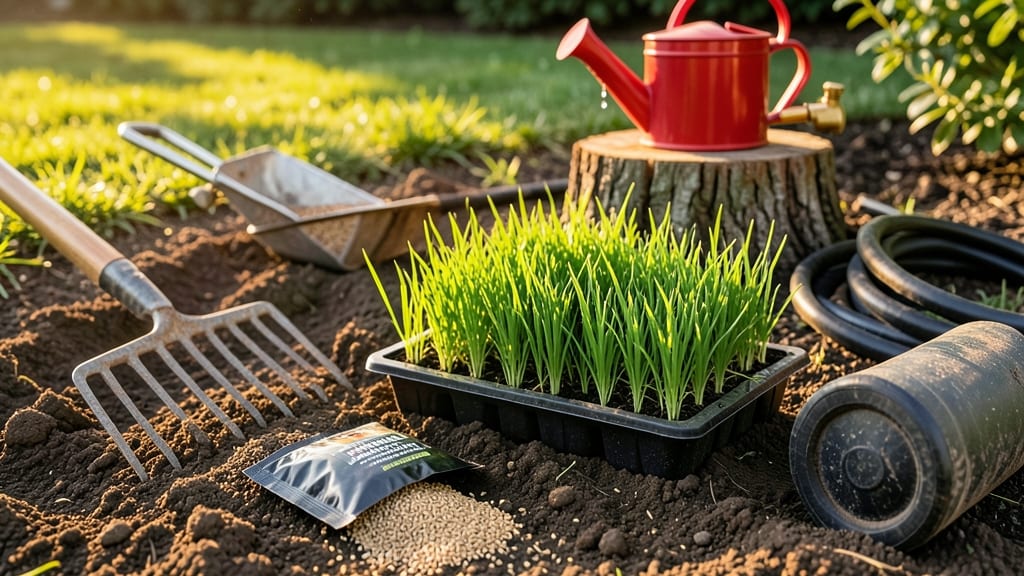
Planting grass in the fall isn't just a timing game—it's the best-kept secret for a lawn that greens up faster and stays vibrant longer. When you get the timing right, cool-season grasses like fescue and ryegrass take advantage of nature's perfect conditions: mild temperatures and reduced competition from weeds.
Most gardeners overlook this window, but the 4-6 weeks before your first frost is when grass roots establish deep before winter sets in. In USDA Zone 6a, that means aiming for late August to early September—just when summer's heat starts to ease up.
This isn't just theory; it's what separates a patchy lawn from a lush carpet of green.
I've seen firsthand how a properly timed fall planting can transform bare spots into thick, healthy grass by spring. The key? Understanding your local climate, preparing the soil right, and choosing the best seed mix for your region.
Let me walk you through exactly how to make this work for your yard, no matter where you live.
Whether you're seeding a new lawn or overseeding an existing one, these insights will help you avoid common mistakes that waste time and money. By the end, you'll know exactly when to plant, how to prep your soil, and what to watch for as those first green shoots appear.
Let's get started.
Optimal fall planting windows by region: cool-season grass timing guide
Timing is everything when planting cool-season grasses like tall fescue or Kentucky bluegrass. Fall offers perfect conditions—mild temperatures and fewer weeds—but your USDA zone dictates the exact window.
Plant too early, and weeds steal nutrients; too late, and frost stunts root growth. Let’s break down the 4-week planting windows for your region.
Northern climates (USDA Zones 3-5) have the earliest windows, while Southern zones (6-8) can extend planting later. Transitional zones (5-7) offer flexibility but require careful monitoring of first frost dates.
Microclimates—like shaded spots or urban heat islands—can shift your ideal window by 1-2 weeks.
For USDA Zones 3-5, aim to finish planting by September 21—this gives roots 6-8 weeks to establish before winter. In these zones, tall fescue and fine fescue thrive when seeded in early September, while Kentucky bluegrass benefits from a slightly later start (mid-September).
Use a soil thermometer to confirm temps are between 60-75°F.
Transitional zones (5-7) offer the most flexibility. Start as early as September 15 in Zone 5 or push to October 5 in Zone 7. Perennial ryegrass germinates quickly, making it ideal for late-September plantings.
Check your local frost date—planting 4-6 weeks before the first frost ensures roots harden off safely.
Southern zones (8-10) can plant later due to milder winters. Target October 1-November 15, but avoid planting after November 15 unless your soil stays above 50°F. Bermuda grass (warm-season) isn’t ideal for fall, but tall fescue and ryegrass excel in these zones when seeded in October.
Water deeply after planting to prevent soil compaction.
Microclimates can shift your window by 1-2 weeks. Shaded areas cool faster—plant 2 weeks earlier—while urban heat islands may delay planting by 1 week. Use mulch in shaded spots to retain warmth and drip irrigation in hot microclimates to maintain moisture.
Adjust your window based on soil temperature, not just air temperature.
Pro tip: Use a fall planting calculator (like those from University Extension offices) to input your ZIP code for precise dates. These tools account for historical frost data and local soil conditions.
For example, Denver (Zone 5) might recommend September 1-15, while Atlanta (Zone 8) could extend to October 15.
Once you’ve nailed the timing, focus on soil prep and seed selection. Loosen soil to 4 inches deep, add compost, and choose seeds labeled for your climate type.
Water lightly daily for the first 2 weeks, then taper to 2-3 times per week until roots establish. With the right window, your cool-season grass will outperform spring plantings by 30-50%.
Remember: The goal is root establishment, not immediate greening. A 4-6 week window before frost ensures your grass survives winter and greens up faster in spring. Start early, monitor conditions, and your lawn will thank you with thicker, healthier growth next season. 🌱
How to prepare soil and seed for fall grass planting: 5 critical steps
Fall is the perfect time to plant cool-season grasses like tall fescue or Kentucky bluegrass. The 4-6 week window before your first frost lets seeds germinate and roots establish before winter dormancy.
But success starts with soil prep and seed selection—skip these steps, and you’ll end up with patchy growth or wasted seed. Let’s break it down into 5 critical steps to ensure your lawn thrives next spring.
First, test your soil’s pH—most grasses prefer a neutral to slightly acidic range (6.0–7.0). Use a soil test kit (available at garden centers) to check, then adjust with lime (to raise pH) or sulfur (to lower pH) 2–4 weeks before planting.
This gives your soil time to stabilize. Loosen the top 4–6 inches of soil with a tiller or rake to create a seed-friendly environment. Remove debris and level the area for even seed distribution.
- Step 1: Test soil pH and adjust to 6.0–7.0 with lime or sulfur.
- Step 2: Loosen soil 4–6 inches deep and remove debris.
- Step 3: Choose cool-season seed blends (e.g., fescue + ryegrass).
- Step 4: Plant seeds ¼ inch deep and cover lightly with soil.
- Step 5: Water daily for 2 weeks (keep soil moist but not soggy).
Next, select the right seed blend. For shade tolerance, choose fine fescue; for drought resistance, opt for tall fescue. Mixing ryegrass (fast germinator) with fescue (long-term durability) creates a balanced lawn.
Buy high-quality seed with a purity guarantee—cheap seed often contains fillers like weed seeds. Read the label for germination rates (aim for 90%+ for best results).
When planting, follow seed depth guidelines: ¼ inch deep for most grasses. Use a drop spreader for even coverage, then lightly rake to cover seeds with soil. Avoid burying seeds too deep—they need light and moisture to germinate. After planting, water gently but frequently.
The top 2 inches of soil should stay moist; use a sprinkler with fine mist to avoid displacing seeds. Mulch with straw (not wood chips) to retain moisture and protect seeds from birds.
Finally, monitor soil moisture and adjust watering as needed. Once seedlings reach 2–3 inches tall, reduce watering to 2–3 times per week to encourage deep root growth. Avoid heavy foot traffic for at least 4–6 weeks to prevent damaging tender roots.
With these 5 steps, your fall-planted grass will establish strong roots before winter, giving you a lush, green lawn next spring.
Pro tip: Fertilize lightly 4–6 weeks after planting with a low-nitrogen starter fertilizer (e.g., 10-10-10) to boost early growth without burning young plants. Happy planting! 🌱