
Plants
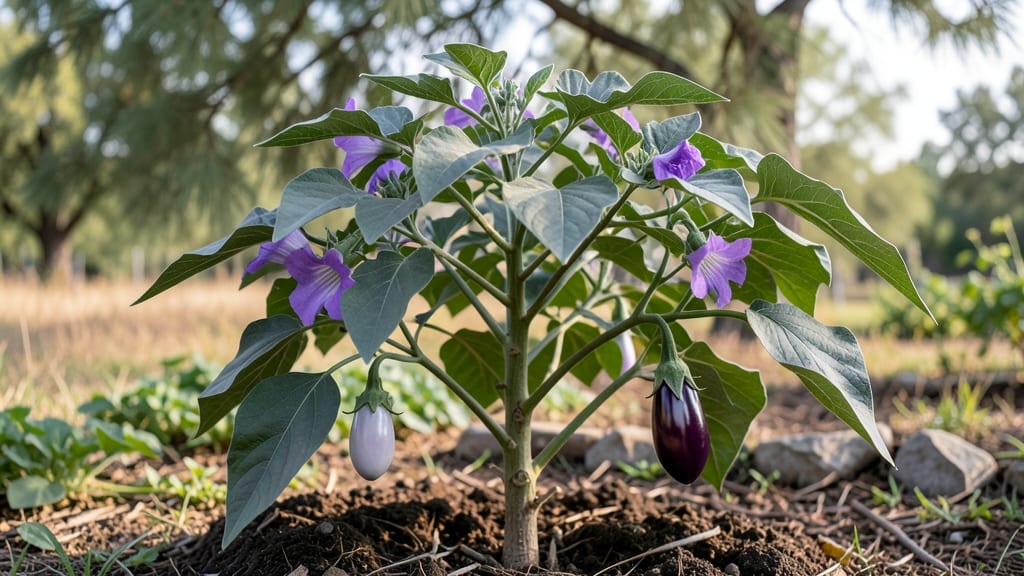
If you’re planning your garden layout this spring and wondering how tall eggplant plants grow, you’re not alone—many gardeners underestimate their space needs. These 🍆 plants can stretch from compact 1-foot dwarfs to towering 4-foot giants, depending on the variety you choose.
Knowing their mature height helps you avoid overcrowding or wasting precious garden real estate.
Standard eggplant varieties typically reach 3 to 4 feet tall, making them perfect for raised beds or containers with enough depth. But some heirloom or trellised types, like ‘Ichiban,’ can climb even higher if given support.
The key to managing their growth lies in understanding your specific variety and adjusting spacing accordingly.
Whether you’re working with USDA Zone 6a’s shorter growing season or a small urban garden, proper spacing ensures better airflow and sunlight—critical factors for healthy fruit production.
I’ll break down how to choose the right spot, when to prune for manageable height, and how to support taller varieties without sacrificing yield.
Ready to maximize your eggplant harvest? Let’s dive into the specifics so you can plan your garden like a pro—no guesswork required.


Eggplant plant height by variety: from compact to towering giants
Eggplants are incredibly diverse, with some varieties staying neatly compact while others grow tall enough to reach your shoulders. Understanding eggplant plant height by variety helps you choose the right types for your garden space, whether you have a small balcony or a sprawling backyard.
Most eggplants fall between 2 to 4 feet, but some can stretch up to 6 feet or more, especially with proper support.
When planning your garden, spacing requirements are just as important as height. Crowding plants can lead to poor airflow, increasing the risk of disease, while giving them too much space might waste valuable garden real estate.
Below, I’ve broken down 12+ popular eggplant varieties by their mature height and ideal spacing, so you can make the best choices for your layout.
🌱
If you’re working with limited space, dwarf varieties like Fairy Tale or Little Fingers are perfect for containers or small gardens. These stay under 2 feet and produce plenty of fruit without taking up much room. For larger gardens, varieties like <
How eggplant height affects growth habits and garden planning
Eggplant height isn't just about aesthetics—it directly impacts your plant's fruit production, airflow circulation, and even harvesting ease. Tall varieties like 'Ichiban' can reach 5-6 feet with proper support, while compact types stay under 2 feet.
Understanding these differences helps you avoid overcrowding, which leads to disease risks and reduced yields.
The growth habit of your eggplant—whether bush-type or indeterminate—plays a crucial role in how you should space them. Bush varieties grow in compact shapes, while indeterminate types keep growing taller and producing flowers.
This affects how much sunlight reaches lower leaves and how air circulates through the plant, both critical for healthy development.
Tall vs. Compact Eggplant Growth: Key Considerations
Tall Eggplant Varieties
- Pros: Higher yield potential, more fruit production per plant
- Pros: Ideal for vertical gardening, saving space
- Pros: Better airflow if properly supported
Compact Eggplant Varieties
- Cons: Lower yield per plant, needs more spacing
- Cons: Requires trellises/stakes, adding maintenance
- Cons: Risk of disease if overcrowded
Garden Planning Tips
- Use trellises for tall varieties like 'Ichiban' (5-6 ft)
- Space bush types 18-24" apart, tall types 24-36"
- Prune lower leaves to improve airflow and sunlight
For indeterminate varieties, height can become a fruit production game-changer. These plants keep growing and flowering, but if they get too tall without support, the lower branches may struggle to get enough sunlight.
This leads to fewer fruits forming on the lower stems. I've found that using strong bamboo stakes or cage supports keeps the plant upright while allowing easy access for harvesting.
Spacing is another critical factor tied to height. Bush varieties like 'Fairy Tale' (1-2 feet tall) need 18-24 inches between plants, while tall varieties like 'Black Beauty' (3-4 feet) require 24-36 inches.
Proper spacing ensures each plant gets enough nutrients, water, and airflow to thrive. Overcrowding is a common mistake that leads to fungal diseases like powdery mildew.
Height also affects harvesting efficiency. Tall eggplants with heavy fruit can flop over if not supported, making it difficult to pick without damaging the plant. I recommend installing support structures at planting time—it's much easier than trying to add them later.
For small-space gardens, consider container growing with dwarf varieties like 'Patio Baby', which stays under 2 feet tall.
Don't forget that pruning can influence height and fruit production. Pinching off the top growth encourages bushier growth with more fruit-bearing branches. However, if you're growing a tall variety for its vertical fruit production, avoid heavy pruning.
Balance is key—let the plant grow naturally while guiding it with supports to maximize both yield and accessibility.