
Plants
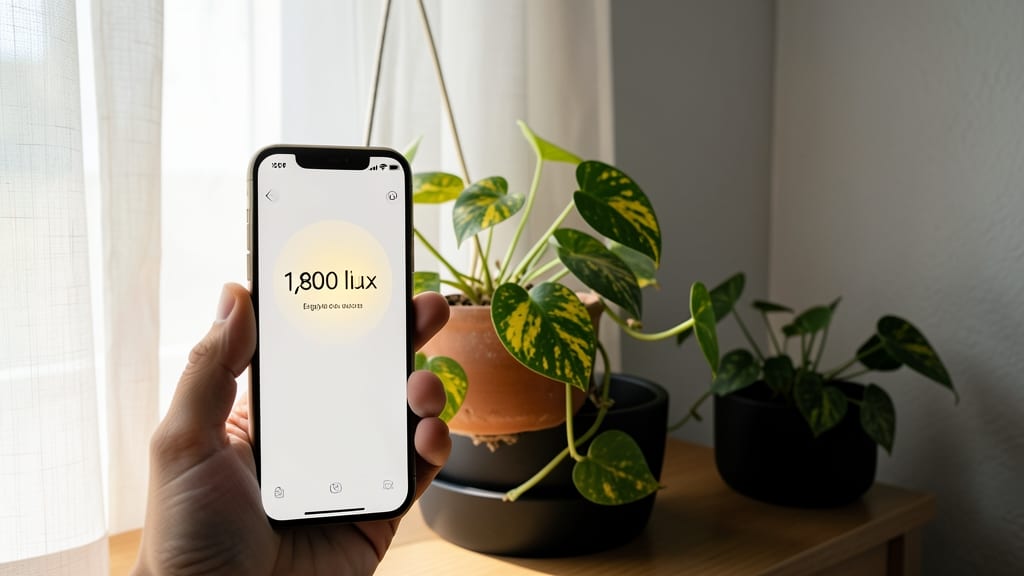
To keep your Pothos 🌿 thriving, you might be surprised by how much light does a plant need—most people overcomplicate it, but the truth is simpler than you’d think.
This hardy vine does beautifully in low to bright indirect light, making it perfect for offices, bathrooms, or even dim corners. The key is avoiding harsh direct sun, which can scorch those lush leaves.
I’ve seen Pothos plants grow happily under fluorescent lights, proving they’re far more adaptable than many realize.
But here’s where things get tricky: too little light leads to leggy, sparse growth, while too much can bleach out the variegation. I’ll break down exactly how to spot the difference and adjust your setup for maximum growth—no guesswork required.
Whether you’re dealing with a north-facing window or just a desk lamp, you’ll learn the best spots to place your plant and how to supplement light when needed. Let’s get your Pothos looking its best with minimal effort.

Pothos light requirements: the ideal spectrum for healthy growth
If you've ever wondered how much light does a pothos plant need, you're not alone. Pothos (Epipremnum aureum) is famously adaptable, but its growth and leaf variegation depend heavily on the light spectrum it receives.
Too little light, and your plant will stretch painfully; too much, and those gorgeous green and yellow leaves might scorch. Let’s break down the science-backed thresholds for healthy pothos growth.
The key to thriving pothos lies in bright indirect light, which mimics its natural understory habitat.
This means placing your plant near a window with sheer curtains or a few feet away from direct sunlight. Artificial grow lights can also work wonders in low-light spaces, but not all bulbs are created equal.
Understanding the light intensity levels—low, medium, and bright indirect—will help you diagnose and fix common issues like yellow leaves or brown tips.
| Light Level | Foot-Candles (fc) | Leaf Color & Growth | Best For | Adjustments Needed |
|---|---|---|---|---|
| Low Light (<50 fc) | 5-50 | Pale green leaves, leggy growth, sparse variegation | North-facing windows, offices, dim corners | Add a grow light (10-12 hrs/day) or rotate plant |
| Medium Light (50-150 fc) | 50-150 | Healthy green leaves, moderate variegation, balanced growth | East/west-facing windows, 2-3 ft from south window | None—ideal range for most pothos varieties |
| Bright Indirect (150-300 fc) | 150-300 | Rich green/yellow variegation, compact growth, glossy leaves | South-facing windows with sheer curtains | Use a sheer curtain to diffuse direct sun; avoid afternoon sun |
| Direct Sun (>300 fc) | >300 | Brown patches, crispy edges, bleached variegation | South windows without filters, greenhouses | Move to indirect light immediately; increase humidity |
Pothos thrives in medium light (50-150 foot-candles), which is why it’s such a popular houseplant. In these conditions, you’ll see vibrant variegation and compact growth. My Golden Pothos, for example, develops stunning yellow splashes when placed near an east-facing window.
However, if your plant starts looking leggy or pale, it’s begging for more light. Rotate the pot quarter-turns weekly to ensure even exposure.
For variegated pothos varieties like 'Marble Queen' or 'Jade,' bright indirect light (150-300 fc) is ideal. These plants need slightly more light to maintain their striking patterns. Place them within 2-3 feet of a south-facing window with a sheer curtain to filter harsh rays.
Without enough light, the white or yellow variegation fades to green, and the plant loses its charm. Think of light as the makeup for your pothos—it brings out its best features!
On the flip side, direct sunlight is a pothos killer. If your plant is near a south-facing window without filters, you’ll notice brown patches or crispy edges within weeks. The UV rays scorch the leaves, and the plant may even develop bleached variegation.
Move it away immediately and consider adding a humidifier to help it recover. Pro tip: Mist the leaves daily to prevent further damage.
If you’re working with artificial lighting, opt for full-spectrum LED grow lights (10,000-12,000K color temperature). These mimic natural light and can replace sunlight entirely. Place the light 6-12 inches above the plant and keep it on for 12-14 hours daily.
I’ve used a 15-watt LED bulb in my home office to keep my pothos thriving year-round, even in winter when natural light is scarce. Just remember: closer = stronger light, but don’t let the leaves touch the bulb!
One common mistake is assuming all low-light conditions are equal. While pothos can survive in low light (<50 fc), growth slows dramatically, and the plant becomes leggy and weak. If your pothos is stretching toward the light source, it’s a clear sign of light deprivation.
Prune the leggy stems to encourage bushier growth, and supplement with a grow light if possible. Even a simple desk lamp with a white bulb can make a difference in a dim corner.
For
Signs your pothos isn’t getting the right light (and how to fix it)
Your pothos plant might be silently screaming for help if its leaves are telling a different story than you expected. Yellowing leaves, brown tips, or leggy, sparse growth are all red flags that your plant isn’t getting the right light exposure.
The good news? These issues are usually easy to diagnose—and just as easy to fix with a few simple adjustments.
Pothos thrives in bright indirect light, but too little or too much light can stress your plant. Under-lighting causes slow growth and pale leaves, while over-lighting leads to crispy edges and faded variegation.
Let’s decode the signs and take action before your pothos becomes a sad, straggly shadow of its former self.
How Much Light Does a Pothos Plant Need?
Low Light
10-20% sunlight
✅ Pros:
- Survives in dim offices
- Minimal leaf scorch risk
❌ Cons: - Slow growth
- Pale, weak leaves
Medium Light
20-40% sunlight
✅ Pros:
- Balanced growth
- Vibrant variegation
- Healthy foliage
❌ Cons: - Needs occasional rotation
Bright Indirect
40-60% sunlight
✅ Pros:
- Optimal variegation
- Faster growth
- Lush, dark green leaves
❌ Cons: - Risk of leaf burn
- Needs distance from windows
If your pothos is showing yellow leaves, it’s likely getting too much direct sunlight. Move it away from south- or west-facing windows where harsh rays can scorch the foliage.
For leggy growth with sparse leaves, your plant is stretching toward light—this means it’s not getting enough. Rotate the pot quarter-turns weekly to encourage even growth.
For brown tips, check humidity levels—low air moisture can dry out leaf edges, especially in artificial lighting setups. Increase humidity by placing the pot on a pebble tray with water or grouping it with other plants.
A simple DIY grow light (like a LED bulb) can also help if natural light is lacking.
Don’t overlook the power of seasonal adjustments. In winter, when daylight fades, supplement with a 12-hour grow light to maintain your pothos’s energy. Even a bright desk lamp 6 inches away can make a difference.
The key is consistency—your pothos will thank you with glossy, vibrant leaves and vigorous vines.
Remember, pothos is famously forgiving, but it won’t thrive in neglect. Pay attention to its leaf signals, tweak its environment, and watch it bounce back. With the right light, your pothos will reward you with lush, trailing beauty for years to come. 🌿