
Plants
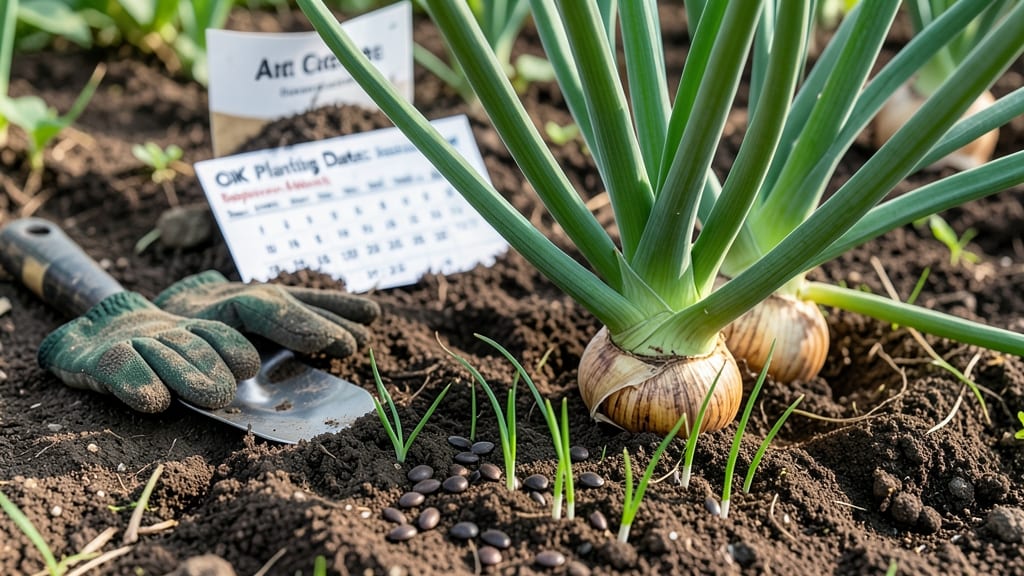
Planting onions in Oklahoma isn’t just about tossing seeds into the dirt—it’s about beating the clock before that last frost sneaks in and ruins your 🧅 harvest. The right timing means the difference between plump, flavorful bulbs and sad, stunted scraps.
Since Oklahoma’s 6a-8a zones swing from chilly winters to scorching summers, knowing exactly when to plant (and which varieties to choose) is your secret weapon.
Most gardeners in the state swear by two planting windows: late winter to early spring for quick harvests or fall for overwintering varieties that mature the next year. But here’s the catch—short-day onions (like Texas Early White) thrive in Oklahoma’s climate, while long-day types might bolt before bulbing.
I’ll show you how to pick the perfect window for your microclimate, whether you’re in Tulsa or the Panhandle.
Skip the guesswork with my step-by-step guide, packed with local frost dates, soil prep tips, and even how to adjust for Oklahoma’s unpredictable weather. By the end, you’ll know exactly when to plant for bulbs so sweet, you’ll forget store-bought ever tasted this good.
Ready to ditch the grocery store and grow onions that rival your grandma’s? Let’s get those sets in the ground at the perfect time—no more wasted efforts or half-hearted harvests.
Oklahoma onion planting calendar: exact months by variety type
Oklahoma gardeners know timing is everything when it comes to onions. The state's diverse climate zones—from the humid Southeast to the drier Panhandle—mean your planting schedule should shift based on your location. Short-day onions thrive in Oklahoma's heat, while long-day varieties need earlier starts.
Let's break down the exact months to plant each type for maximum success.
Most Oklahoma gardeners focus on spring and fall plantings, but the Panhandle's colder winters may allow for earlier spring starts. Short-day onions (like Texas Early White) are the gold standard here, while intermediate-day varieties (like Sweet Sandwich) offer flexibility. Long-day onions (like Yellow Globe) require cooler starts, making them trickier in Oklahoma's heat.
Here's the critical comparison of planting windows by variety type, including seed-starting vs. transplant timing:
| Variety Type | Planting Window | Seed Start Indoors | Transplant Outdoors | Best Regions |
|---|---|---|---|---|
| Short-Day Onions | Feb-Mar (spring) or Aug-Sept (fall) | Not needed | Feb 15-Apr 15 (spring) or Aug 15-Sept 30 (fall) | Southeast, Central OK |
| Intermediate-Day Onions | Jan-Feb (spring) or Aug-Sept (fall) | Jan 15-Feb 15 | Feb 1-Mar 15 (spring) or Aug 15-Sept 15 (fall) | Panhandle, West OK |
| Long-Day Onions | Jan-Feb (spring only) | Jan 1-Feb 15 | Feb 15-Mar 1 | Northern OK, higher elevations |
| Green Onions (Bunching) | Feb-Apr or Aug-Sept | Not needed | Feb 15-Apr 15 (spring) or Aug 15-Sept 30 (fall) | Statewide |
For spring plantings, aim to get short-day onions in the ground 2-3 weeks before your last frost date—typically mid-February to early April across most of Oklahoma. Long-day onions need an earlier start, often requiring indoor seed starting in January to transplant by mid-March.
The Panhandle's colder climate allows for slightly earlier starts than the humid Southeast.
Fall plantings are equally critical, especially for overwintering onions that mature the following spring. Short-day varieties should go in August to early September, while intermediate-day onions can handle late August to mid-September plantings. Never plant after September 15, as the bulbs won't mature before winter frost.
Oklahoma's variable frost dates mean you should always check your local USDA zone. For example, Zone 7a (Panhandle) can plant 2 weeks earlier than Zone 8a (Southeast). Use row covers or mulch to extend your planting window in cooler microclimates like the Arbuckle Mountains.
Pro tip: Direct-sow seeds for short-day onions in late winter—they germinate quickly in Oklahoma's mild soils. Transplants (sets) are easier for beginners and give you a 2-week head start on growth. Soil temperature should be at least 50°F for successful germination.
If you're growing long-day onions, start seeds indoors in January under grow lights to avoid bolting. Transplant outdoors when seedlings are 3-4 inches tall and hardened off. Hardneck onions (a long-day type) need vernalization—exposure to cold—to form bulbs, so they're best for northern Oklahoma gardeners.
Remember, onion sets (small bulbs) are faster to mature than seeds, making them ideal for late winter plantings. Choose short-day sets for spring harvests or fall-planted sets for next year's crop. Store-bought sets
How to adjust planting dates for Oklahoma’s microclimates
Oklahoma’s diverse geography means your neighbor’s perfect onion harvest could be a frost-burned failure in your garden. The Arbuckle Mountains hold frost longer than Tulsa, while the Panhandle’s dry heat demands earlier plantings. Understanding these microclimate shifts lets you fine-tune your schedule for bulbs that store like champions.
Start by checking your USDA Zone (6a-8a), but dig deeper: elevation changes can shift frost dates by weeks.
For example, Altus (Zone 7b) might play by March 15th rules, while Sallisaw (Zone 7a) could face late frosts until April 1st. Soil type also matters—clay holds cold longer than sandy loam, delaying your planting window.
- 1 Panhandle (Zones 7b-8a): Plant short-day onions in February-March (earlier than most of OK). Use row covers for late frosts.
- 2 Central OK (Tulsa, OKC): Aim for March 15-April 15 for spring plantings. Fall onions go in August-September before heat stress hits.
- 3 Southeast (Zones 7a-6b): Delay until April 1-May 1 due to later frosts. Overwinter onions planted in October may survive mild winters.
- 4 Mountain Regions (Arbuckles): Wait until April 15-May 1 for spring. Fall plantings must be in by July 31 to mature before frost.
For fall plantings, Oklahoma’s dry heat can trick onions into bolting. In western OK, plant by August 15; in eastern regions, extend to September 15. Use shade cloth if summer temps exceed 90°F to protect young sets.
Pro tip: Test your microclimate by planting a frost-sensitive crop like lettuce in early spring. If it survives, your onions are ready to go. If not, wait another 2-3 weeks. Local Extension offices track frost data—call yours for hyper-local adjustments.
Don’t overlook soil warmth: Onions need 40°F soil to germinate. In higher elevations, use black plastic mulch 2 weeks before planting to warm the ground. Low-lying areas may need earlier starts due to faster warming.
With these tweaks, you’ll beat Oklahoma’s climate curve and enjoy homegrown onions that store until next summer. The key? Know your corner of the state—and plant accordingly. 🌱