
Watering
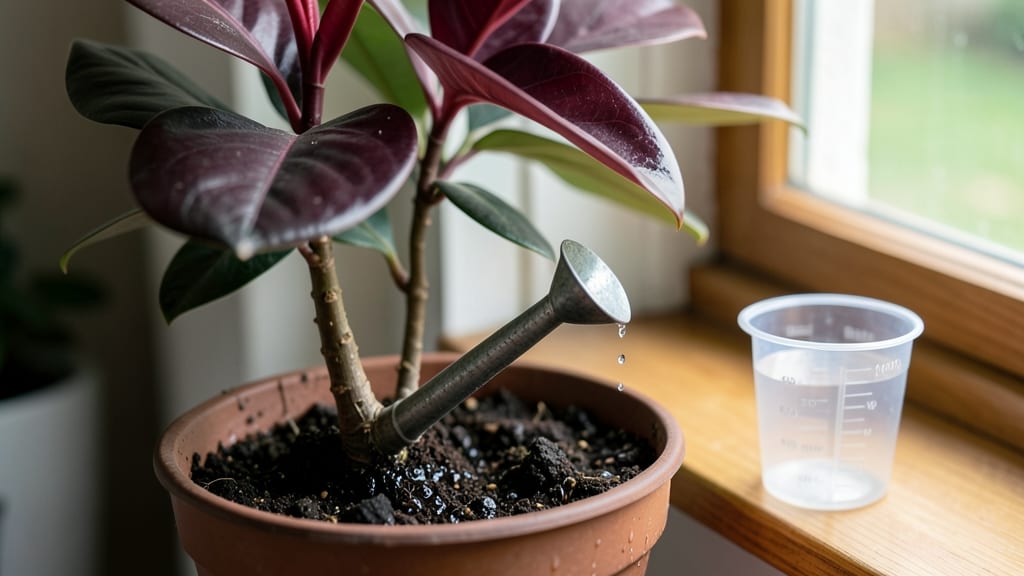
Figuring out how much water your rubber plant 🌿 needs can feel like guessing—pour too much, and you risk root rot; too little, and those glossy leaves turn sad and crispy. The truth? Rubber plants thrive on a schedule, not a spray bottle habit.
I’ve watched countless rubber plants suffer from well-meaning but inconsistent watering, and the key to their survival isn’t complicated: it’s about deep, infrequent soakings that mimic their natural tropical roots.
Whether you’re a seasoned plant parent or just bringing home your first Rubber Plant 🌿, this guide cuts through the guesswork to show you exactly when to water—and how to tell if you’re nailing it or drowning your poor houseplant.
We’ll break down the science behind those 3-4 week intervals between waterings, plus how to adjust for your home’s humidity and the seasons. No more shriveled leaves or soggy soil—just lush, thriving foliage that’ll make your space feel alive.
Ready to master the art of watering? Let’s dive into the exact routine that’ll keep your rubber plant happy, healthy, and begging for more.
How often to water a rubber plant: science-backed weeks between soakings
Rubber plants (Ficus elastica) thrive on consistency, and their watering schedule is no exception. Unlike thirsty succulents or tropical orchids, these glossy-leaved beauties prefer deep, infrequent waterings that mimic their natural forest understory habitat. The key?
Waiting until the top 2-3 inches of soil are completely dry between soakings—typically every 3-4 weeks for mature plants. This schedule prevents the two most common killers: root rot from overwatering and leaf scorch from dehydration.
My rubber plant collection taught me this lesson the hard way—I once drowned a 3-foot specimen by watering weekly, only to watch its leaves turn yellow and drop within weeks. The fix? Adjusting to a bi-weekly soaking schedule in summer and monthly in winter.
Science backs this approach: Rubber plants store water in their thick stems, so they’re built to handle dry spells better than soggy soil.
Here’s the game-changer: Your rubber plant’s watering needs shift based on three critical factors. First, pot size—smaller pots dry out faster than large containers. Second, seasonal changes—summer heat demands more frequent watering than winter dormancy.
Third, humidity levels—dry indoor air (especially in winter) accelerates moisture loss. Let’s break down the exact intervals using these variables.
| Factor | Watering Interval | Soil Check Method | Signs of Stress |
|---|---|---|---|
| Small Pot (<6" diameter) | Every 2-3 weeks | Finger test: Dry up to 1 inch | Wilting leaves, dry soil cracks |
| Large Pot (>12" diameter) | Every 4-5 weeks | Finger test: Dry up to 3 inches | Yellowing lower leaves, mushy stems |
| Summer (Active Growth) | Every 2-3 weeks | Soil probe: Dry 2-3 inches deep | Brown leaf edges, slow growth |
| Winter (Dormancy) | Every 5-6 weeks | Finger test: Dry 4+ inches deep | Drooping leaves, soil smells sour |
| Low Humidity (<40%) | Every 2 weeks | Soil moisture meter: 2 on scale | Crispy leaf tips, rapid wilting |
| High Humidity (>60%) | Every 4-5 weeks | Finger test: Dry 3-4 inches | Yellow patches, moldy soil surface |
To master this schedule, I rely on a two-step moisture test before watering. First, stick your finger 2-3 inches deep into the soil—if it feels bone-dry, it’s time to water. Second, lift the pot: A dry pot means the roots haven’t accessed moisture yet.
Pro tip: Use a terracotta pot for better moisture regulation, as they wick water away faster than plastic. My 5-gallon rubber plant in terracotta goes 5 weeks between waterings in winter, while the same-sized plant in plastic needs water every 3 weeks.
Seasonal shifts demand flexibility. In sum
Rubber plant watering mistakes that destroy leaves (and how to fix them)
Your rubber plant’s leaves tell a story—yellowing edges, crispy brown tips, or droopy foliage are all silent screams for help. The truth? Most watering mistakes stem from well-meaning habits that actually suffocate roots.
I’ve seen Ficus elastica leaves turn from glossy green to sad brown because of just one common error: shallow watering that never reaches the roots.
Even worse, gardeners often adjust watering based on guesswork rather than seasonal needs or pot material. A terracotta pot dries out faster than plastic, yet many treat them the same. Let’s fix this—your rubber plant’s survival depends on diagnosing these mistakes before they become permanent damage.
🚨 WARNING: Your Rubber Plant’s Watering Schedule Is Likely Wrong
Mistake #1: Shallow watering (top 1 inch only) leaves roots thirsty while the soil below stays soggy. Fix: Water until it drains from the bottom—250-500ml for most pots.
Mistake #2: Ignoring seasonal changes. Winter watering every 2 weeks can drown roots when growth slows. Fix: Reduce to monthly in cooler months.
Mistake #3: Wrong pot material. Plastic traps moisture; terracotta dries too fast. Fix: Use pots with drainage holes + well-draining soil (60% potting mix, 40% perlite).
Let’s tackle the most destructive symptoms first. Yellow leaves often mean overwatering, but they can also signal nutrient deficiency if the soil is too wet. The key? Check the soil texture—if it’s compacted or smells sour, you’re overdoing it.
I once had a rubber plant with yellowing leaves because I kept it in a glazed ceramic pot without drainage.
Brown tips? That’s usually low humidity or fluoride buildup from tap water. Try this fix: Mist leaves 2x weekly or place the pot on a pebble tray with water.
For fluoride, use filtered or distilled water instead. My rubber plant’s tips turned green within 3 weeks after switching to filtered water.
Wilting leaves? This is tricky—it could mean underwatering or root rot. Stick your finger 2 inches deep into the soil. If it’s bone-dry, water deeply.
If it’s mushy, your plant needs repotting in fresh, dry soil. Pro tip: Never let it sit in saucers of water—empty them after 10 minutes.
Here’s the golden rule: Consistency beats frequency. Rubber plants thrive on predictable moisture, not daily sips. Stick to deep waterings every 1-2 weeks (adjust for seasons) and watch those leaves go from sad to glossy in weeks.
Your plant will thank you with bold new growth and fewer brown edges.