
Watering
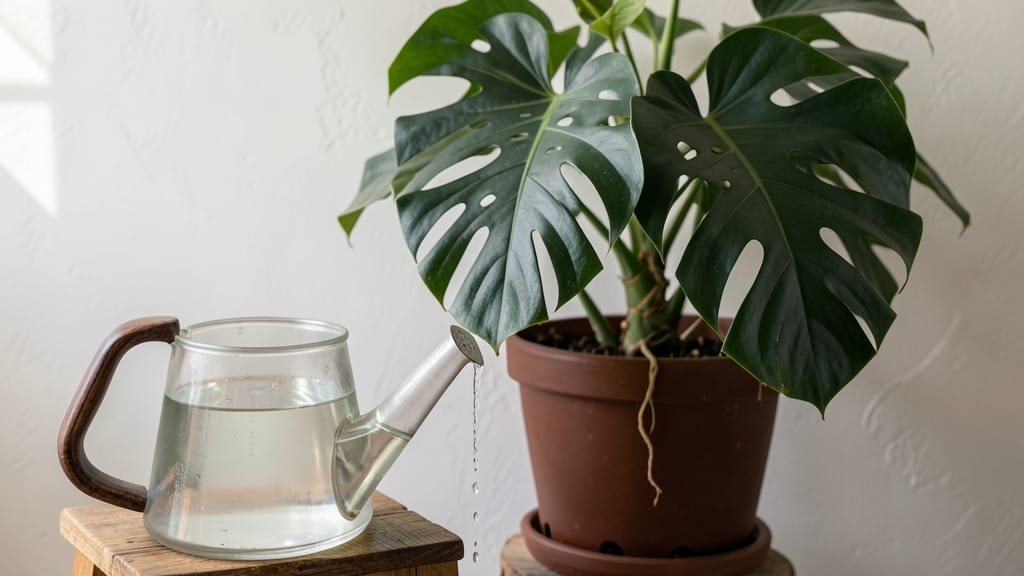
Your monstera plant needs the right amount of water—but figuring out how much can be tricky. That’s because getting the watering routine right is the difference between lush, split-leaf glory and sad, brown-edged disappointment.
I’ve learned the hard way that monsteras don’t follow the same rules as other houseplants. Too much water, and you’ll end up with root rot; too little, and those gorgeous leaves will start curling up like they’re begging for help.
The key? A simple schedule that changes with the seasons—and a few tricks to read your plant’s signals.
In this guide, I’ll break down exactly how often to water your monstera based on your home’s humidity, pot size, and even the time of year.
You’ll learn the 3 signs your plant needs a drink (or a break from the water), plus how to fix common mistakes before they ruin your favorite foliage.
Ready to turn your monstera into a thriving jungle corner? Let’s get started with the exact watering routine that’ll keep those leaves happy all year round.
Monstera watering schedule: how often to water based on season
Getting your monstera plant watering schedule right is the key to those iconic split leaves and lush vines. Since monsteras are tropical plants, they love moisture but hate soggy roots. The watering frequency shifts dramatically with seasons, so let’s break it down by month to keep your plant thriving year-round.
First, always check the top 1-2 inches of soil before watering. Stick your finger in—if it feels dry, it’s time. If it’s still damp, wait a few more days. Seasonal changes affect how quickly soil dries out, so adjusting your routine prevents both underwatering and overwatering.
| Season | Watering Frequency | Soil Moisture Test | Visual Cues | Water Amount |
|---|---|---|---|---|
| Spring | Every 7-10 days | Top 1-2" dry | New growth appears | Deep soak until water drains |
| Summer | Every 5-7 days | Top 1" dry | Leaves may droop slightly by evening | 1000-1500ml (adjust for pot size) |
| Fall | Every 10-14 days | Top 2" dry | Growth slows, leaves stay firm | Moderate soak (700-1000ml) |
| Winter | Every 14-21 days | Top 3" dry | Leaves may yellow slightly (normal) | Light soak (500-700ml) |
In spring, your monstera wakes up from dormancy and needs consistent moisture to support new growth. Water when the soil feels dry to the touch, but avoid letting it sit in water—root rot is a common killer of monsteras.
Aim for a deep watering that saturates the entire root ball.
Summer is when monsteras drink the most. With higher humidity and warmer air, soil dries out faster. Check your plant daily—if the leaves start to droop by late afternoon, it’s time to water. Morning watering is ideal to prevent fungal issues from overnight moisture.
As fall arrives, growth slows and your monstera enters a rest period. Reduce watering to every 10-14 days, letting the top 2 inches of soil dry out completely. This mimics its natural tropical dry season and prevents overwatering during cooler months.
Winter care is all about patience. Monsteras need very little water during this dormant phase. Only water when the top 3 inches of soil are bone dry, and use about half the amount you’d give in summer. Yellowing leaves are normal—just trim them off to encourage new growth in spring.
Pro tip: Group your monsteras with other houseplants to create a microclimate. The humidity from their leaves will help your monstera retain moisture longer between waterings. Also, always use a pot with drainage holes—this prevents water from pooling at the roots.
One final rule: Never let your monstera sit in standing water. Empty the saucer underneath 30 minutes after watering to keep roots healthy. With this seasonal schedule, your monstera will reward you with glossy, split leaves all year round! 🌿
Signs your monstera needs water (or too much!): Leaf clues
Your monstera plant communicates its hydration needs through its leaves, often before soil tests reveal the issue. Yellowing leaves or drooping foliage are common signals, but each clue requires a different fix. Understanding these leaf patterns helps prevent both underwatering and overwatering—two mistakes that stifle your plant's growth.
Start by checking the soil moisture with your finger. Stick it about 1-2 inches deep—if it feels dry, your monstera needs water. But if the soil stays damp for days, you're likely overwatering. The key is balance, especially since monsteras thrive in humid environments but despise soggy roots.
🌱 Key Takeaway: Monstera Watering Rules
| Sign | Cause | Fix |
|---|---|---|
| Yellow leaves | Overwatering or poor drainage | Let soil dry 50% before watering; repot if needed |
| Brown crispy edges | Underwatering or low humidity | Water deeply; mist leaves or use pebble tray |
| Drooping leaves | Thirsty or root stress | Water thoroughly; check for root rot |
| Soft, mushy stems | Root rot from excess water | Trim affected roots; use well-draining mix |
💧 Pro Tip: Always water in the morning to reduce fungal risks and let leaves dry overnight.
Yellowing leaves often signal overwatering, but they can also appear if your monstera isn’t getting enough light. Check the leaf pattern: if only the older leaves yellow while new growth stays green, it’s likely a watering issue. For brown, crispy edges, your plant is begging for hydration—water until it drains from the bottom, then empty the saucer to prevent root rot.
When your monstera’s leaves droop dramatically, it’s usually a cry for water. Stick your finger in the soil—if it’s bone dry, give it a deep drink. However, if the drooping persists after watering, your plant might be suffering from root stress or pests.
Gently inspect the roots for signs of rot or bugs before adjusting your care routine.
One of the most alarming signs is soft, mushy stems, a clear indicator of root rot. This happens when your monstera sits in soggy soil for too long. Act fast: trim away the black, mushy roots and repot in a well-draining mix with perlite or orchid bark.
Reduce watering frequency until the roots recover, which can take several weeks.
Remember, monsteras are tropical plants that love consistent moisture but hate wet feet. The best way to avoid these issues? Test your soil regularly and adjust your watering based on the season.
In winter, let the top 3 inches dry out between waterings, while summer may require weekly hydration. Your monstera’s leaves will thank you with lush, vibrant growth!