
Flowers
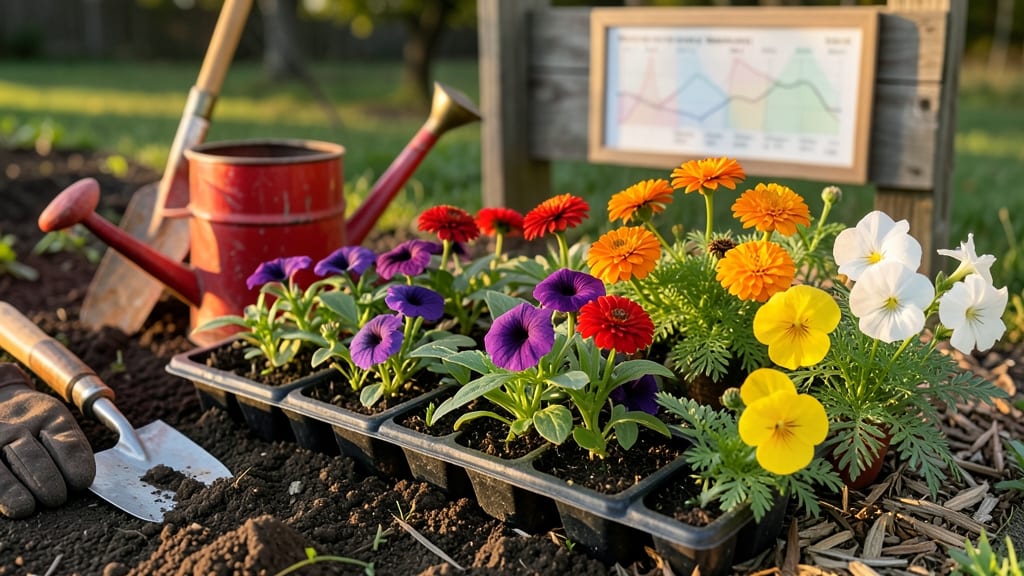
Planting flowers in Michigan at the wrong time can mean the difference between a vibrant garden and a sad pile of frost-killed seedlings. The ideal window for most flowers falls between early May and late July, but timing varies dramatically across the state's Zone 5b-6b regions.
If you're eager to get started, don't rush—waiting for the last frost date (typically mid-April to early May) protects your delicate blooms.
I've learned the hard way that impatient planting often leads to wilting petals and wasted effort, so let's explore how to time your plantings perfectly for Michigan's unpredictable climate.
This guide covers everything from hardy annuals that can handle early spring planting to heat-loving varieties that thrive when planted in late summer. We'll also look at how to extend your growing season with simple techniques, so you can enjoy 🌸 flowers from spring through fall.
Whether you're in Detroit's urban heat islands or Traverse City's cooler lakeshore, these regional tips will help you create a stunning garden that blooms reliably year after year. Let's dive into the best planting strategies for Michigan's diverse growing conditions.
Michigan last frost dates by region: Zone 4 vs. Zone 5 vs. Zone 6
Michigan’s last frost dates vary dramatically by region, making it critical to know your USDA zone and local microclimates. In Zone 4 areas like northern Michigan, frosts can linger until May 15, while Zone 6 pockets near Lake Erie may see frost-free conditions by April 20.
These differences mean Detroit gardeners can plant marigolds weeks earlier than those in Traverse City.
Urban areas like Grand Rapids often experience warmer microclimates due to concrete and buildings, while rural Upper Peninsula regions stay colder longer. Even within a single city, south-facing slopes warm up faster than shaded valleys.
Always check historical frost data for your exact location, as these averages can shift by 1-2 weeks annually.
For real-time tracking, use the National Weather Service frost alerts or Michigan State University Extension’s frost date maps. These tools provide 5-day forecasts and historical patterns to help you time flower planting perfectly.
Pro tip: Sign up for local gardening groups—they often share neighborhood-specific frost reports that official sources miss.
Here’s a region-by-region breakdown of Michigan’s last frost dates, including Zone 4, Zone 5, and Zone 6 areas, with notes on urban vs. rural variations:
If you’re in Zone 5 or 6, you can push boundaries by planting cold-hardy annuals like pansies or snapdragons as early as March 20 in sheltered spots.
However, Zone 4 gardeners should wait until May 1 for most flowers, even with protection. Always monitor soil temperatures—flowers like petunias need soil at 55°F+ to thrive.
Best flowers to plant by Michigan’s frost timeline (early, mid, late season)
Timing is everything when planting flowers in Michigan’s Zone 4-6 climate. The key is matching hardy varieties with frost-free windows to avoid damage from late spring frosts or summer heat stress.
I’ve divided the best flowers into three planting windows: early season (March-April), mid-season (May-June), and late season (July-August), with special notes for Michigan natives that thrive in our conditions.
For early season planting, focus on cold-tolerant annuals and perennials that can handle light frosts. These flowers often bloom in cooler weather and add vibrant color to spring gardens.
In mid-season, you’ll want heat-loving annuals that can handle Michigan’s summer sun, while late-season plantings focus on varieties that bloom into fall or store energy for next year.
-
1. Early Season (March-April)
Plant these cold-hardy flowers 2-4 weeks before last frost (Zone 4) or after (Zone 6).- 🌷 Pansies (Zone 3-8) – Thrives in 40°F+ temps; blooms spring/fall
- 🌿 Sweet Alyssum (Zone 5-9) – Drought-tolerant; attracts pollinators
- 🌸 Michigan Native: Wild Columbine – Drought-resistant perennial for shade
- ❄️ Calendula – Edible petals; tolerates 32°F frosts
-
2. Mid-Season (May-June)
Wait until soil warms to 50°F+ for these heat-loving annuals.- 🌻 Marigolds (Zone 2-11) – Pest-repellent; blooms all summer
- 🌼 Zinnias (Zone 3-10) – Long bloom time (July-October)
- 🌺 Petunias (Zone 10-11, but hardy in containers) – Needs full sun
- 🌿 Michigan Native: Butterfly Weed – Drought-proof; attracts monarchs
-
3. Late Season (July-August)
Plant these for fall color or perennial establishment.- 🌼 Cosmos (Zone 3-9) – Self-seeds; thrives in heat
- 🌸 Black-Eyed Susan (Zone 3-9) – Michigan native; fall-blooming
- 🌺 Snapdragons (Zone 7-11, but cool-season varieties work)
- 🌿 Coneflower (Zone 3-11) – Pollinator magnet; blooms late summer
Michigan’s Zone 6 areas (like southern Lower Peninsula) can handle slightly later plantings, but always check your local frost dates. For example, Detroit’s last frost is typically April 20th, while Traverse City’s is May 10th. Use these timelines to avoid frost damage while maximizing bloom time.
Pro tip: Succession plant heat-loving flowers like marigolds every 2 weeks in June-July to ensure continuous blooms. Pair them with Michigan natives like bee balm or wild bergamot for low-maintenance, pollinator-friendly gardens that thrive in our climate.
Remember, soil temperature matters as much as air temperature. Use a soil thermometer to confirm it’s 50°F+ before planting heat-sensitive annuals. For perennials, early planting gives roots time to establish before winter.