
Plants
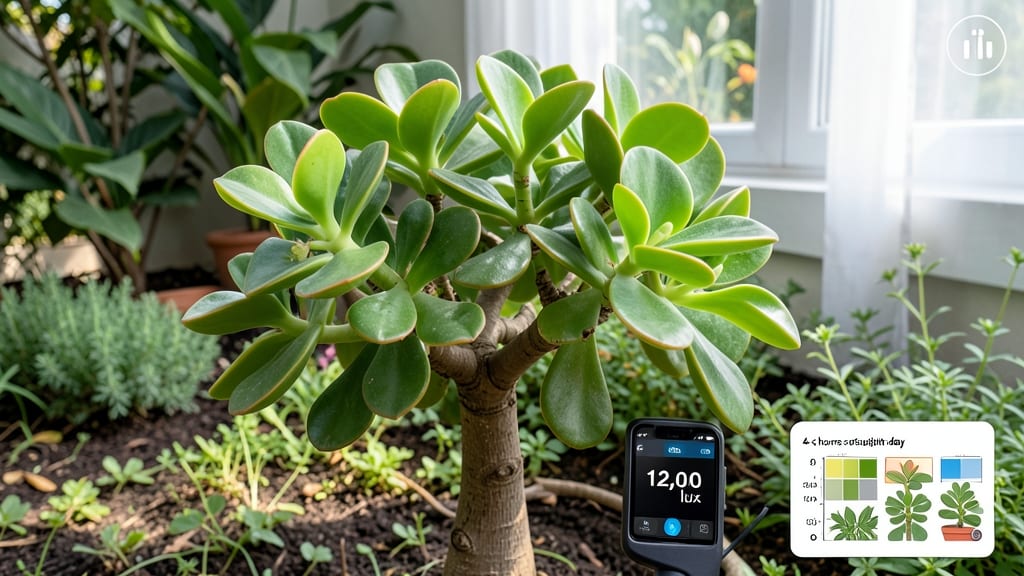
To keep your Jade Plant 🌿 thriving, you might be surprised by how much light a jade plant requires—and getting it wrong could mean the difference between vibrant leaves and sad, stretched-out stems.
Most people assume these succulents love harsh sunlight, but the truth is far more nuanced: too little light makes them leggy, while too much can scorch their delicate foliage.
Jade Plants crave bright indirect sunlight for 4-6 hours daily, but they can’t handle the intense midday rays. Think of it like a golden rule: if you can see your fingers through the leaves when held up to the light, it’s too dim.
Place yours near an east-facing window for the perfect balance, or rotate the pot weekly to ensure even growth.
Here’s the kicker: indoor setups often fail because we overestimate natural light. Fluorescent bulbs won’t cut it—opt for full-spectrum LEDs if your space lacks windows. And if your Jade Plant starts looking like it’s stretching toward the sky, it’s begging for more light (or a brighter spot).
I’ll show you exactly how to spot light issues—from yellowing leaves to crispy edges—and fix them fast. Trust me, once you nail this, your Jade Plant will reward you with thick, glossy leaves that’ll make every plant lover jealous.

Optimal light requirements for jade plants: sunlight balance explained
Jade plants (Crassula ovata) thrive under bright indirect sunlight, but their light needs often confuse even experienced gardeners. These succulents originate from South Africa’s arid regions, where they adapted to intense but filtered sunlight.
In your home or garden, replicating this environment is key to preventing common issues like yellowing leaves or stretched stems.
The ideal light balance for jade plants falls between 4-6 hours of bright indirect light daily. This means placing them near east-facing or north-facing windows where they receive morning sun without harsh afternoon rays.
Too little light causes leggy growth, while too much direct sun leads to sunburned leaves.
| Light Requirement | Specification | Ideal Conditions |
|---|---|---|
| Daily Light Hours | 4-6 hours | Bright indirect sunlight (morning sun preferred) |
| Best Window Placement | East or North-facing | 2-3 feet from window |
| Direct Sun Tolerance | 2-3 hours max | Avoid afternoon sun (1 PM - 5 PM) |
| Low Light Threshold | Under 3 hours | Leads to etiolated (stretched) growth |
| Seasonal Adjustments | Winter vs. Summer | Reduce light exposure in summer; supplement in winter |
For indoor jade plants, south-facing windows can be too intense, especially during summer months. If you notice white or brown patches on leaves, move your plant further from the window or use a sheer curtain to diffuse the light.
In contrast, west-facing windows often provide the perfect balance of afternoon light without the harsh intensity of south-facing exposures.
Outdoor jade plants require partial shade during peak sunlight hours. A spot under a dappled tree canopy or on a covered patio works well. If growing outdoors in hot climates, provide afternoon shade to prevent leaf scorch.
Even succulents like jade plants can suffer from too much direct sun, especially when temperatures exceed 90°F (32°C).
Seasonal changes demand adjustments to your jade plant’s light exposure. During winter months, when natural light is scarce, supplement with a grow light for 6-8 hours daily if indoor lighting is insufficient.
Look for full-spectrum LED grow lights, which mimic natural sunlight and encourage healthy growth. In summer, rotate your plant occasionally to ensure even light exposure on all sides, preventing lopsided growth.
Identifying light deficiencies early saves your jade plant from irreversible damage. Yellowing leaves often signal overwatering combined with low light, while red or purple tinges indicate too much direct sun.
If your plant develops long, thin stems with sparse leaves, it’s stretching toward light—a clear sign of insufficient brightness. Address this by moving the plant closer to a light source or increasing artificial light exposure.
Remember, jade plants are drought-tolerant but not light-tolerant. Their succulent nature means they store water, but they can’t compensate for poor light conditions. When in doubt, err on the side of brighter light, as most jade plants recover better from too much light than too little.
With the right balance, your jade plant will reward you with thick, vibrant leaves and a sturdy, compact shape.
Pro tip: Use a light meter (available for under $20) to measure light intensity in foot-candles. Jade plants thrive in 1,000-2,500 foot-candles of light. If your reading is below 1,000, it’s time to relocate or supplement with artificial lighting.
🌿
How to adjust light for jade plants in different environments
Jade plants (Crassula ovata) are famously low-maintenance, but their light needs are the single most critical factor for vibrant growth. In indoor setups, a south-facing window provides ideal morning sunlight without harsh afternoon rays.
However, if your space lacks natural light, grow lights become essential. For outdoor cultivation, partial shade with dappled sunlight mimics their native habitat in South Africa.
Adjusting light isn’t just about placement—it’s about balancing intensity and duration. Too little light causes leggy growth and pale leaves, while too much leads to sunburned patches or crispy edges. Let’s break down how to tailor light for your jade plant’s environment, whether indoors or out.
| Light Source | Daily Duration | Intensity | Best For |
|---|---|---|---|
| South Window | 4-6 hours | Bright Indirect | Indoor Growth |
| East/West Window | 3-4 hours | Moderate | Slow Growth |
| Grow Lights (LED) | 6-8 hours | Full Spectrum | Low-Light Spaces |
| Outdoor Shade | 2-4 hours | Dappled Sun | Summer Heat |
For indoor setups, place your jade plant 2-3 feet from a south-facing window to avoid direct afternoon sun, which can scorch leaves. If your space is dim, LED grow lights (6000K-6500K) are ideal—they mimic natural sunlight and prevent leggy growth.
Rotate the pot quarter-turns weekly to ensure even light exposure.
Outdoor jade plants thrive in partial shade, especially in hot climates. Use lattice or sheer curtains to filter harsh afternoon rays while allowing morning sunlight. In cooler climates, they can handle partial sun, but monitor for sunburn signs like brown patches on leaves.
If your jade plant develops stretched stems or pale leaves, it’s craving more light. Move it closer to a window or supplement with a grow light for 12 hours daily.
Conversely, yellowing or crispy edges signal too much direct sun—relocate to a shadier spot immediately. Adjusting light isn’t just about placement; it’s about observing and responding to your plant’s cues.
Pro tip: Use a light meter app to track intensity. Jade plants thrive at 2,500-5,000 foot-candles—any less, and growth slows; any more, and leaves burn. With the right light balance, your jade plant will reward you with thick, glossy leaves and compact growth. 🌿